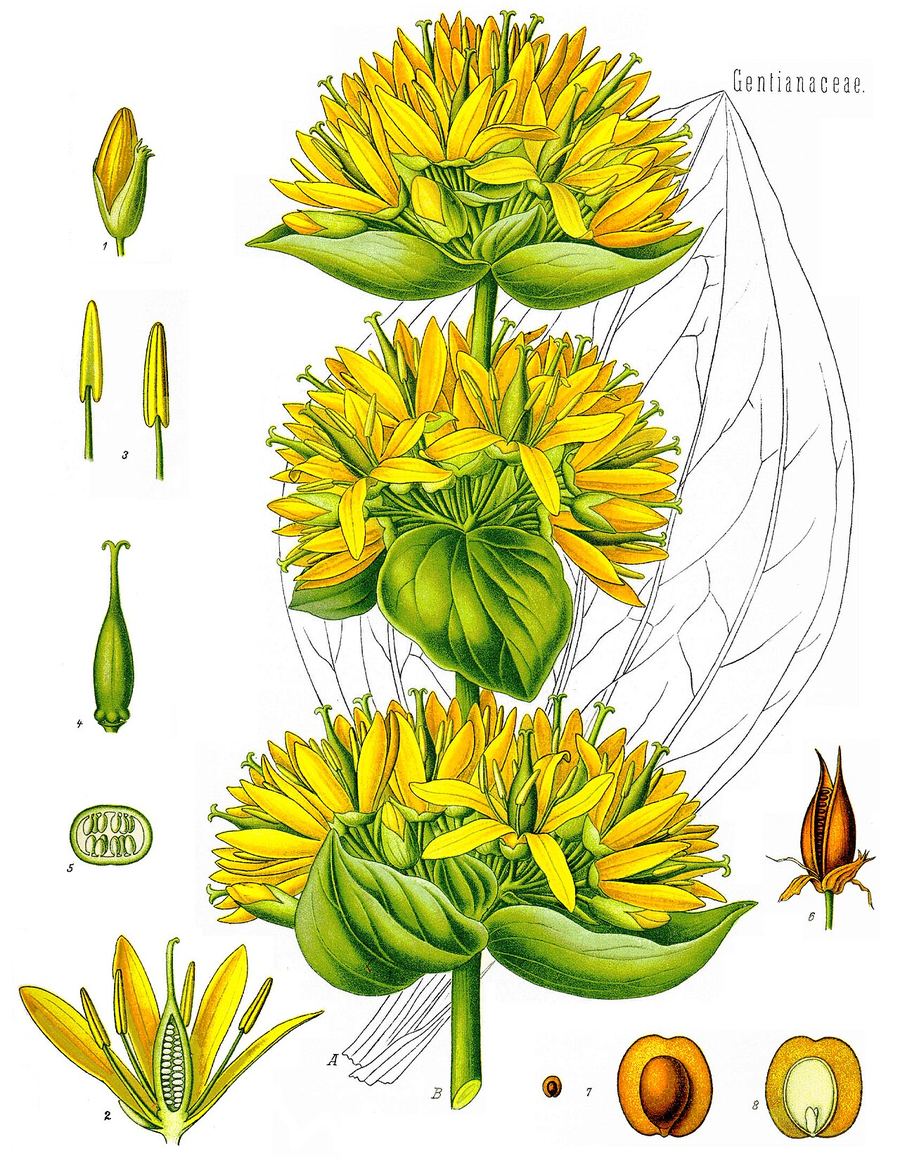
Gentian
Gentiana lutea
Herbs & Roots. Western & European.
Also called Yellow gentian, Great yellow gentian
Spanish: Genciana
Avoid with stomach ulcersThe bitter root of a tall yellow mountain flower, used to stir the appetite.
Did you know? Gentian is named after Gentius, an Illyrian king who was said to have discovered its healing use.
What it may help, and how strong the proof is
- Digestion & gut health. Used before meals to stir appetite and digestion. Few human studies exist.Traditional proof
- Liver. Traditional bitter for liver and gallbladder complaints. No good human proof exists.Traditional proof
Parts of the body
Traditional use
European herbalists and bitters makers used the root for appetite, digestion, and weak stomachs for centuries. It is still used in some Swiss and German bitters.
How it is classified
How people take it
Traditional guidance is about 1 to 3 grams of dried root a day, or about 1 milliliter of tincture up to three times daily before meals. Doses vary by product.
Tincture, tea and capsule.
Where to get it
Grows in mountain meadows across Europe, and is both wild-harvested and farmed. Sold as dried root, tinctures, and bitters. Wild roots are slow to regrow, so choose sustainably sourced products.
Be careful
Can irritate the stomach and may worsen ulcers or heartburn. Avoid it with peptic ulcers or gastritis, and avoid it in pregnancy because its safety there is not established.
Avoid if: stomach ulcers; gastritis; pregnancy.
Mixing with other things
- Works well together
A classic bitter digestive pairing in old tonics and liqueurs.
- Works well together
Both are bitter herbs used for digestion in European tradition.
- Works well together
A classic botanical pairing in bitters and liqueurs.
Found in these formulas
Digestive bitters (Western)
The honest take
Gentian is one of the most bitter plants known, and its digestive use is part of a long tradition. Human research is very thin. It is not a proven appetite or liver aid, and it can irritate sensitive stomachs.