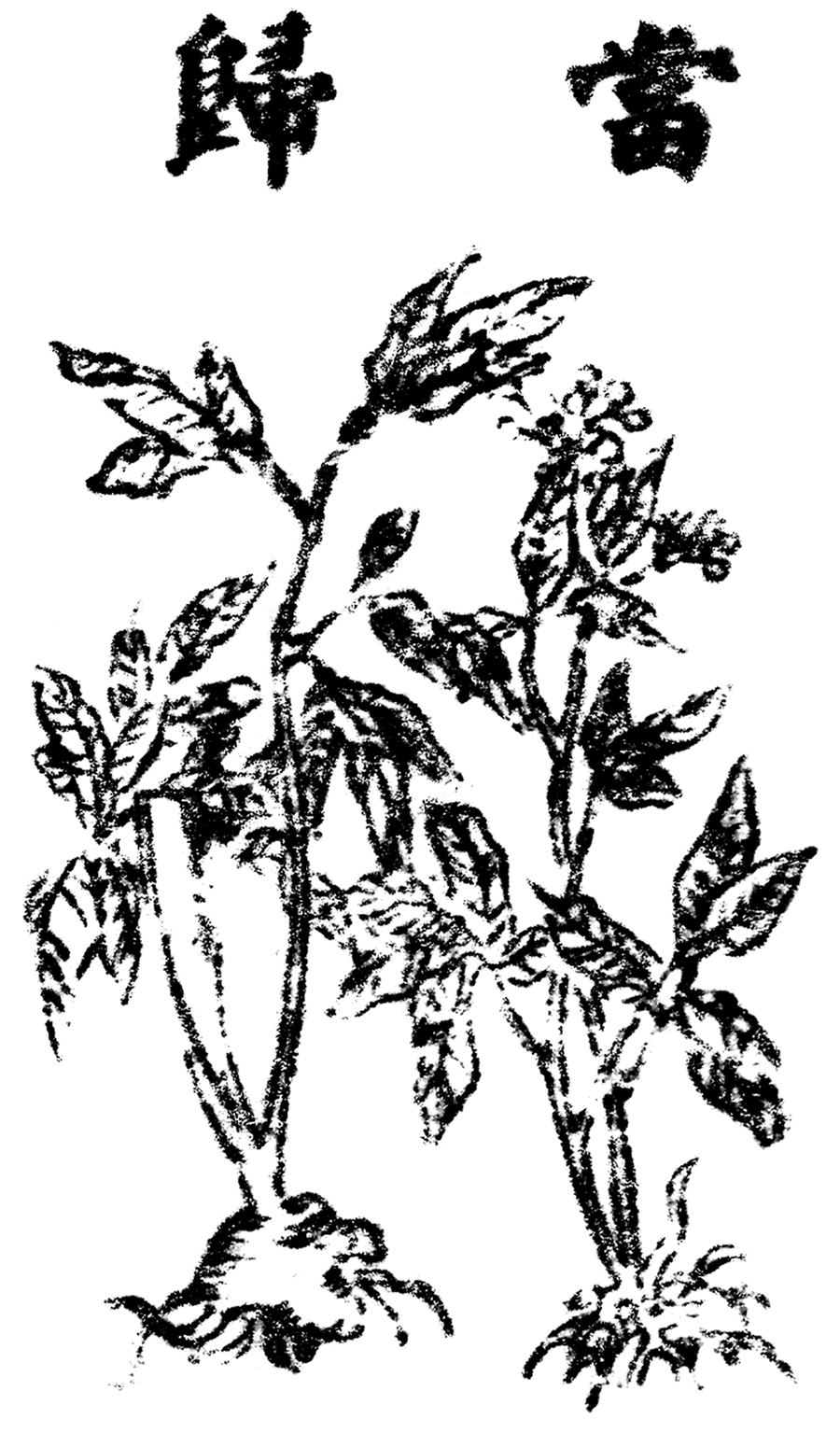
Dong quai
Angelica sinensis · 当归
Herbs & Roots. Chinese Medicine.
Also called Dang gui, Chinese angelica, Female ginseng, Tang kuei
Pinyin: Dāng Guī
Spanish: Angélica china
Blood thinner and sun risksA fragrant root used in Chinese medicine for blood health and women's cycles. Most of its claims are unproven.
Did you know? Dong quai contains coumarins, a chemical family related to warfarin, so it can affect bleeding.
What it may help, and how strong the proof is
- Pain & headaches. Used in tradition for painful periods. Human trials are few and inconsistent.Traditional proof
- Anemia & blood building. Traditional blood tonic. No good human trials confirm better blood counts or relief from anemia.Traditional proof
- Women's health. A placebo-controlled trial of the root found no help with hot flashes in 71 postmenopausal women. Trials of multi-herb formulas report mixed results.Not supported
Parts of the body
Traditional use
Traditional Chinese Medicine uses dang gui to nourish and move blood, regulate periods and ease pain. It is the core herb of Si Wu Tang (Four Substances Decoction).
How it is classified
- Herbal actions
- Emmenagogue, Nutritive, Analgesic, Circulatory. Energy: warming.
- Chinese medicine
- 当归 Tonify blood. Nature: warm. Flavour: sweet, pungent, bitter. Enters the Liver, Heart and Spleen channels.
How people take it
The placebo-controlled menopause trial used 4.5 g of root a day for 24 weeks. Traditional formulas use about 6 to 12 g of root per dose. Capsules are common.
Tea, decoction, capsule, tincture and powder.
Where to get it
Cultivated in China, Japan and Korea. Sold as dried root slices, powder, capsules, tea and in formula blends. Root quality and coumarin content vary.
Be careful
Can make skin more sensitive to sunlight. Can raise bleeding risk, especially with blood thinners or aspirin. Stomach upset and diarrhea can occur. Avoid before surgery and in pregnancy.
Avoid if: pregnancy; breastfeeding; bleeding disorders; before surgery; hormone-sensitive cancer.
Mixing with other things
- Works well together
Both are sold as women's cycle and menopause herbs, though proof is weak for both.
- Works well together
Common together in women's hormone blends.
- Works well together
Both are common in women's herbal blends for cycle and menopause symptoms.
- Works well together
Common in women's herbal blends for cycle and childbirth support.
- Works well together
Huang qi with a small amount of dong quai is the classic Dang Gui Bu Xue Tang (Blood Building Decoction) for weakness.
- Works well together
Dang shen and dong quai are both in Bu Zhong Yi Qi Tang, one of the best-known Qi and blood formulas.
- Works well together
Dong quai and shu di huang are both in Si Wu Tang (Four Substances Decoction), the classic blood formula.
- Works well together
Dong quai and bai shao are both in Si Wu Tang.
- Works well together
Dong quai and bai zhu are both in Xiao Yao San (Free and Easy Wanderer), used in tradition for stress and irritability.
- Works well together
Yin yang huo and dong quai are both in Er Xian Tang.
- Works well together
Ba ji tian and dong quai are both in Er Xian Tang.
- Works well together
Xiao Yao San (Free and Easy Wanderer) combines bupleurum with dong quai, white peony and atractylodes to ease stress-related moods.
- Works well together
Also in Dan Zhi Xiao Yao San, where dong quai nourishes blood.
- Works well together
Shi Quan Da Bu Tang (Ten Complete Tonic) includes cinnamon bark with dong quai, astragalus and rehmannia for weakness with cold signs.
- Works well together
Dong quai is a core herb of Si Wu Tang, a blood-building period formula.
- Don't mixBlood thinners (warfarin, Eliquis, Xarelto, Plavix, daily aspirin)
Coumarins in dong quai may raise INR and bleeding risk with warfarin. Avoid combining them unless a clinician supervises.
- Worth knowingBirth control (the pill and other hormonal birth control)
Dong quai has weak estrogen-like effects. Its effect on hormone medicines is not well studied.
Adds up with others that may slow blood clotting: , , , , , , , , , , , , , and 40 more.
Found in these formulas
Four Substances (TCM), Free & Easy Wanderer (TCM), Restore the Spleen (TCM)
The honest take
Dong quai is one of the most studied tonics in China, yet the best root-only trial found no benefit for menopause. Its blood-building and period benefits rest on tradition. Its coumarins are real, so the bleeding and sun risks are real too.