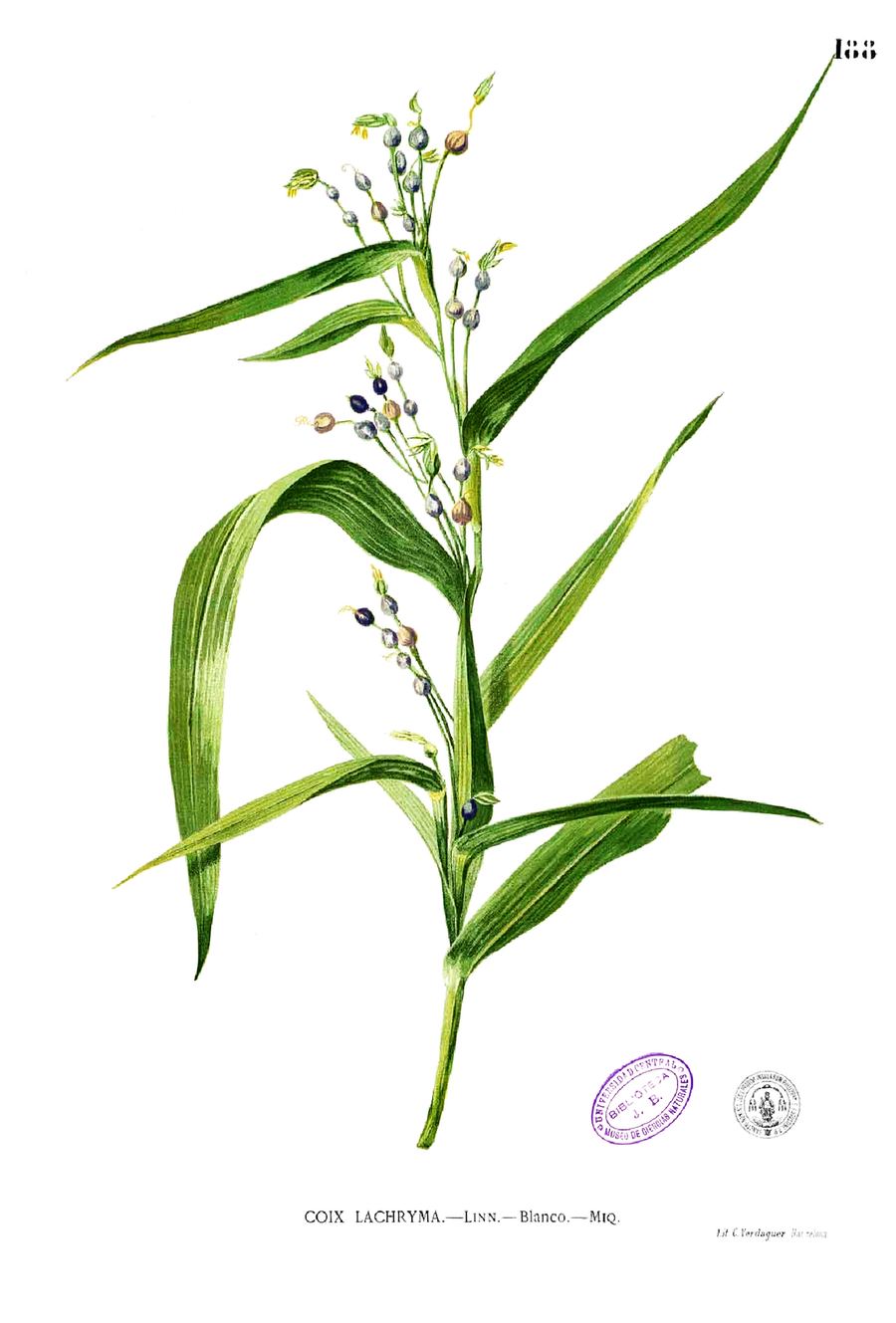
Job's tears (yi yi ren)
Coix lacryma-jobi · 薏苡仁
Seeds & Grains. Chinese Medicine.
Also called Yi yi ren, Adlay, Coix seed
Pinyin: Yì Yǐ Rén
Spanish: Lágrimas de Job
A starchy seed eaten as a grain and used in Chinese medicine to drain dampness and ease gut and joint trouble.
Did you know? Coix seeds look like small pearls, and they have been used in Chinese medicine for nearly 2,000 years.
What it may help, and how strong the proof is
- Digestion & gut health. Used for loose stools and gut upset in tradition. Human trials are few.Traditional proof
- Skin. Used for warts and rough skin in tradition. Human proof is limited.Traditional proof
Parts of the body
Traditional use
Chinese medicine uses yi yi ren to drain dampness, ease swelling, calm loose stools, and ease stiff joint pain. It is used in porridges and in formulas.
How it is classified
How people take it
Eaten as a grain in porridge or rice. In decoctions, about 9 to 30 grams is used.
Food, decoction, powder and tea.
Where to get it
Grown in Asia and parts of Africa. Sold as whole seeds, flour, and tea. Seeds are common in Asian grocery stores.
Be careful
Safe as food in normal amounts. Large medicinal doses are not well studied in pregnancy or in children. Ask a clinician before using it for warts or skin problems.
Avoid if: pregnancy.
Mixing with other things
- Works well together
Paired with poria in Shen Ling Bai Zhu San (Ginseng, Poria and Atractylodes Powder).
- Works well together
Paired with Chinese yam in Shen Ling Bai Zhu San to support digestion.
- Works well together
Paired with lotus seed in Shen Ling Bai Zhu San to calm loose stools.
The honest take
Yi yi ren is a common, food-like seed with a long history. Human trials for skin and gut claims are few. It is low risk as food, but medicinal doses should follow a clinician's guidance.