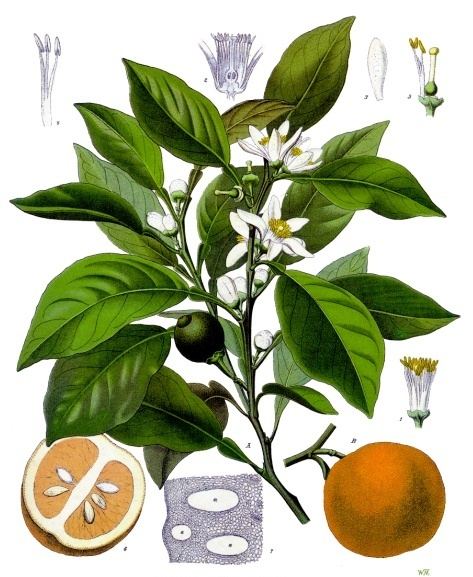
Bitter orange
Citrus × aurantium · 枳实
Herbs & Roots. Chinese Medicine, Latin American & Amazon and Western & European.
Also called Sour orange, Seville orange, Zhi shi (immature fruit), Zhi qiao (mature fruit)
Pinyin: Zhǐ Shí
Spanish: Naranja amarga
Heart and blood pressure riskA sour citrus fruit whose dried fruit is used in Chinese medicine, and whose extract (synephrine) is sold for weight loss and energy.
Did you know? Seville oranges, a kind of bitter orange, are the classic fruit for British marmalade because they are too sour to eat fresh.
What it may help, and how strong the proof is
- Digestion & gut health. Traditional use for poor appetite, gas, and bloating. Few human studies exist.Traditional proof
- Weight. Synephrine products are marketed for weight loss. The few trials mix it with caffeine, so the orange's own effect is unclear, and heart risks are real.Traditional proof
Parts of the body
Traditional use
Chinese medicine has used the dried immature fruit (zhi shi) for bloating, blocked energy (Qi), and constipation. Western herbalists use the peel as a bitter tonic for appetite and digestion.
How it is classified
- Herbal actions
- Bitter, Carminative, Stimulant. Energy: cooling.
- Chinese medicine
- 枳实 Regulate Qi. Nature: cool. Flavour: bitter, pungent, sour. Enters the Spleen and Stomach channels.
How people take it
In Chinese herbal prescriptions, dried fruit is usually used in small amounts, about 3 to 10 grams per decoction, under a practitioner's guidance. Weight-loss products use concentrated synephrine extracts at doses that vary widely.
Decoction, tincture and capsule.
Where to get it
Grows in southern China, Japan, and the Mediterranean. Dried immature fruit (zhi shi) and mature fruit (zhi qiao) are sold in Chinese herb shops. Extracts and capsules are sold for weight loss and energy.
Be careful
Synephrine is a stimulant that raises heart rate and blood pressure only slightly on its own, but caffeine makes the effect stronger. Serious heart problems, including heart attack and stroke, have been reported with some products, and some have been found to contain synthetic stimulants such as methylsynephrine. Do not take it with heart disease, high blood pressure, or glaucoma, and note that the fruit's furanocoumarins change how the body handles many medicines, like grapefruit.
Avoid if: heart disease; high blood pressure; glaucoma; pregnancy; breastfeeding; children under 12.
Mixing with other things
- Works well together
Paired in Zhi Zhu Wan (Bitter Orange and Atractylodes Pill) for bloating and poor digestion.
- Works well together
Paired in Chinese formulas for bloating and blocked energy, such as Minor Order the Qi Decoction.
- Don't mixBlood pressure medicine (lisinopril, amlodipine, losartan)
Synephrine raises blood pressure, so it works against blood pressure medicines.
- Don't mixAntidepressants (Zoloft, Prozac, Lexapro and others)
With MAO inhibitor antidepressants, it can cause a dangerous rise in blood pressure.
- Use cautionStatins (Lipitor, Zocor, Crestor)
Grapefruit-like compounds can raise statin levels in the blood, which raises the risk of muscle side effects.
The honest take
The fruit is safe to eat for most people, but synephrine extracts for weight loss and energy carry real heart risks. Human evidence for weight loss is small and mixed, and many trials mix the extract with caffeine. The hype outruns the proof, and the risk is not worth it for most people.