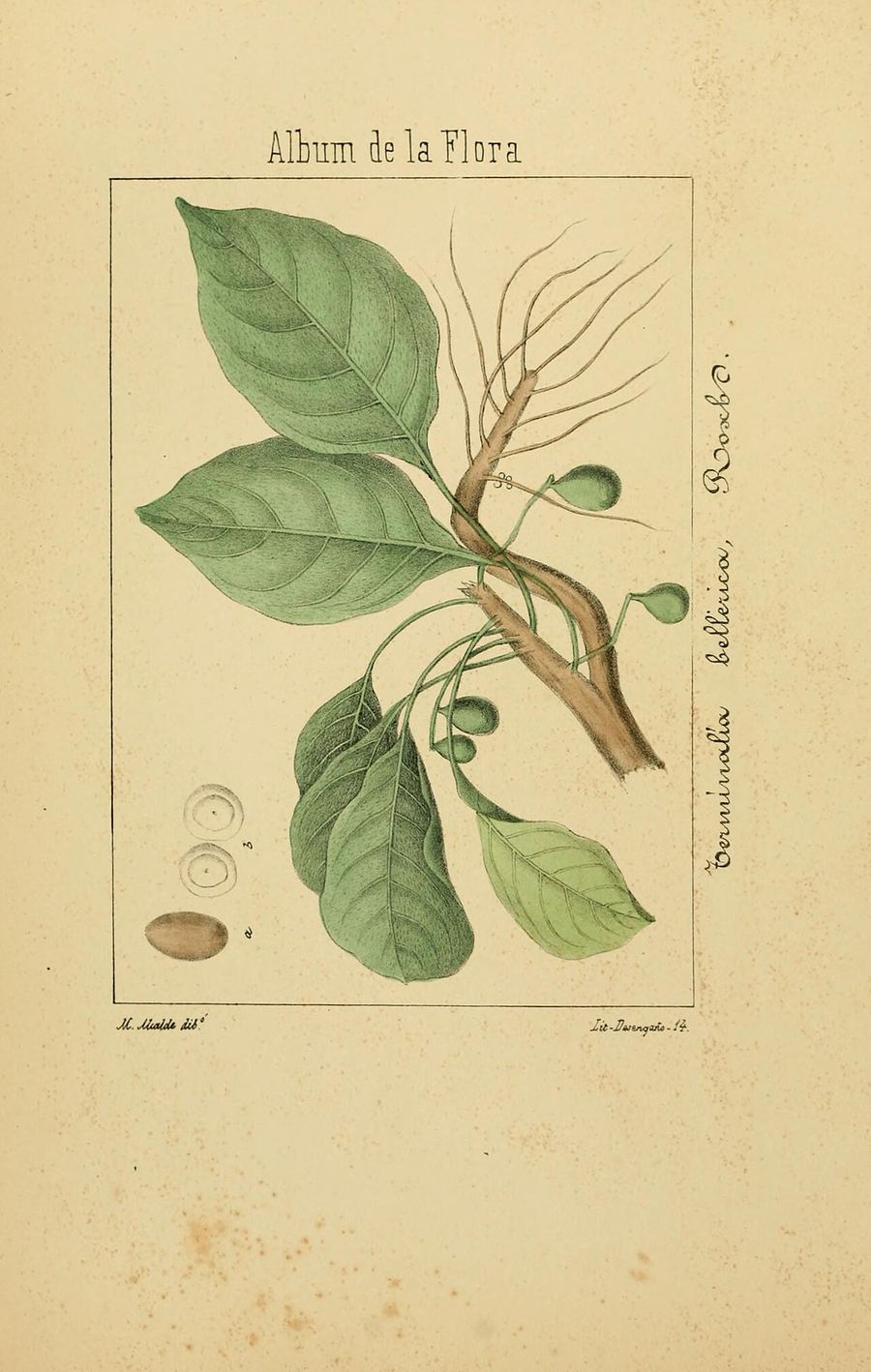
Bibhitaki
Terminalia bellirica · विभीतक
Herbs & Roots. Ayurveda.
Also called Belleric myrobalan, Bahera, Beleric
Spanish: Belérico
Sanskrit: विभीतक (Bibhitaki)
Laxative; limited safety dataBibhitaki is the fruit of an Indian tree that Ayurveda uses for coughs, the eyes and hair, mostly based on tradition and lab work.
Did you know? Bibhitaki belongs to the same plant family as the trees of many African savannas, and it is a close relative of haritaki.
What it may help, and how strong the proof is
- Sore throat & cough. Traditional remedy for coughs and sore throat. Human trials are lacking.Traditional proof
- Liver. Animal studies suggest protection against liver damage. Good human trials are lacking.Traditional proof
- Hair & nails. Used in hair oils and blends for hair health, but no good human trial shows it grows hair.Not supported
Parts of the body
Traditional use
Ayurveda uses bibhitaki for coughs, sore throat and hair health. It is one of the three fruits in triphala, a classic digestive blend.
How it is classified
- Herbal actions
- Expectorant, Astringent, Antimicrobial. Energy: warming.
- Ayurveda
- Calms Vata and Kapha. Taste (rasa): astringent. Energy (virya): heating. After digestion (vipaka): sweet. Kasahara (relieves cough), Rasayana (rejuvenative).
How people take it
Traditional doses are about 1 to 3 grams of dried fruit powder a day, usually as part of triphala. Modern dosing studies are lacking.
Powder, capsule and decoction.
Where to get it
A large tree native to India, Myanmar and nearby parts of Asia. Sold as dried fruit, powder, capsules and in triphala blends, and labels should name Terminalia bellirica.
Be careful
Generally tolerated in small doses. Large amounts may cause loose stools or stomach upset. It is not well studied in pregnancy, breastfeeding or children, so avoid those uses.
Avoid if: pregnancy; breastfeeding; children under 12.
Mixing with other things
- Works well together
The third fruit in triphala, the classic Ayurvedic three-fruit blend.
- Works well together
Part of triphala, the classic three-fruit Ayurvedic blend.
Found in these formulas
Triphala (Ayurveda)
The honest take
Bibhitaki's uses are mostly traditional, with lab and animal studies for liver and immune effects. Human trials for coughs or hair are lacking. Its best-known use is as one part of triphala, and the evidence for triphala is stronger than the evidence for bibhitaki alone.