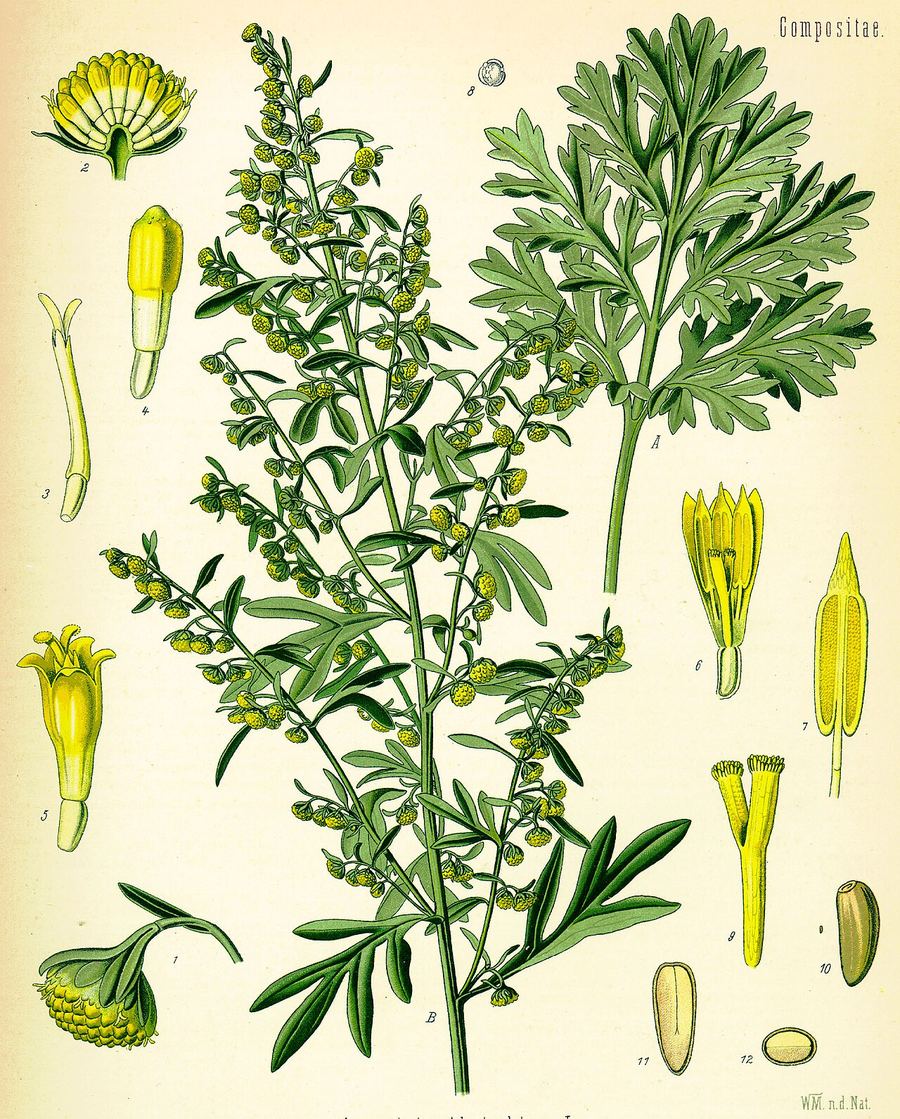
Wormwood
Artemisia absinthium
Herbs & Roots. Western & European and Middle Eastern & Unani.
Also called Absinthe, Grand wormwood, Absinthium
Spanish: Ajenjo
Seizure risk at high dosesA silvery, very bitter herb that gave absinthe its name and much of its flavor.
Did you know? Absinthe was banned in the United States in 1912 and in France in 1915. The ban was partly blamed on thujone, a compound found in wormwood.
What it may help, and how strong the proof is
- Digestion & gut health. Bitter tea used for appetite and upset stomach. Few human studies exist.Traditional proof
- Parasites & worms. Old remedy for worms. This is not sweet wormwood, the source of the malaria drug artemisinin.Traditional proof
Parts of the body
Traditional use
Herbalists used wormwood tea for appetite, digestion, and worms for centuries. It was also a classic ingredient in bitter tonics and vermouth.
How it is classified
- Herbal actions
- Bitter, Anti-parasite, Carminative. Energy: warming.
How people take it
Traditional tea is about 1 teaspoon of dried herb per cup, taken only for a short time. No trial-based doses exist.
Tea, tincture and capsule.
Where to get it
Grows on dry, rocky ground across Europe, Asia, and North America. Sold as dried herb, tea, tinctures, and capsules. Thujone-free wormwood is used in drinks and bitters.
Be careful
Thujone can cause seizures and kidney problems in high doses. Avoid it in pregnancy, while breastfeeding, and with seizure disorders, liver disease, or kidney disease. Do not swallow the essential oil. Home-made preparations vary a lot in strength.
Avoid if: pregnancy; breastfeeding; epilepsy; liver disease; kidney disease.
Mixing with other things
- Works well together
A classic bitter digestive pairing in old tonics and liqueurs.
- Works well together
Both are used in bitter liqueurs and digestive blends.
- Works well together
A close relative, used in bitter and digestive traditions.
- Use cautionAlcohol (beer, wine, spirits)
Alcohol adds to strain on the brain and liver, and wormwood liqueurs combine both.
The honest take
Wormwood has a long history as a bitter digestive herb, but there is little human research on it. Thujone can cause seizures in high doses, and no safe daily amount has been set. It is not the same as sweet wormwood, which produces artemisinin, so keep its use short and small.