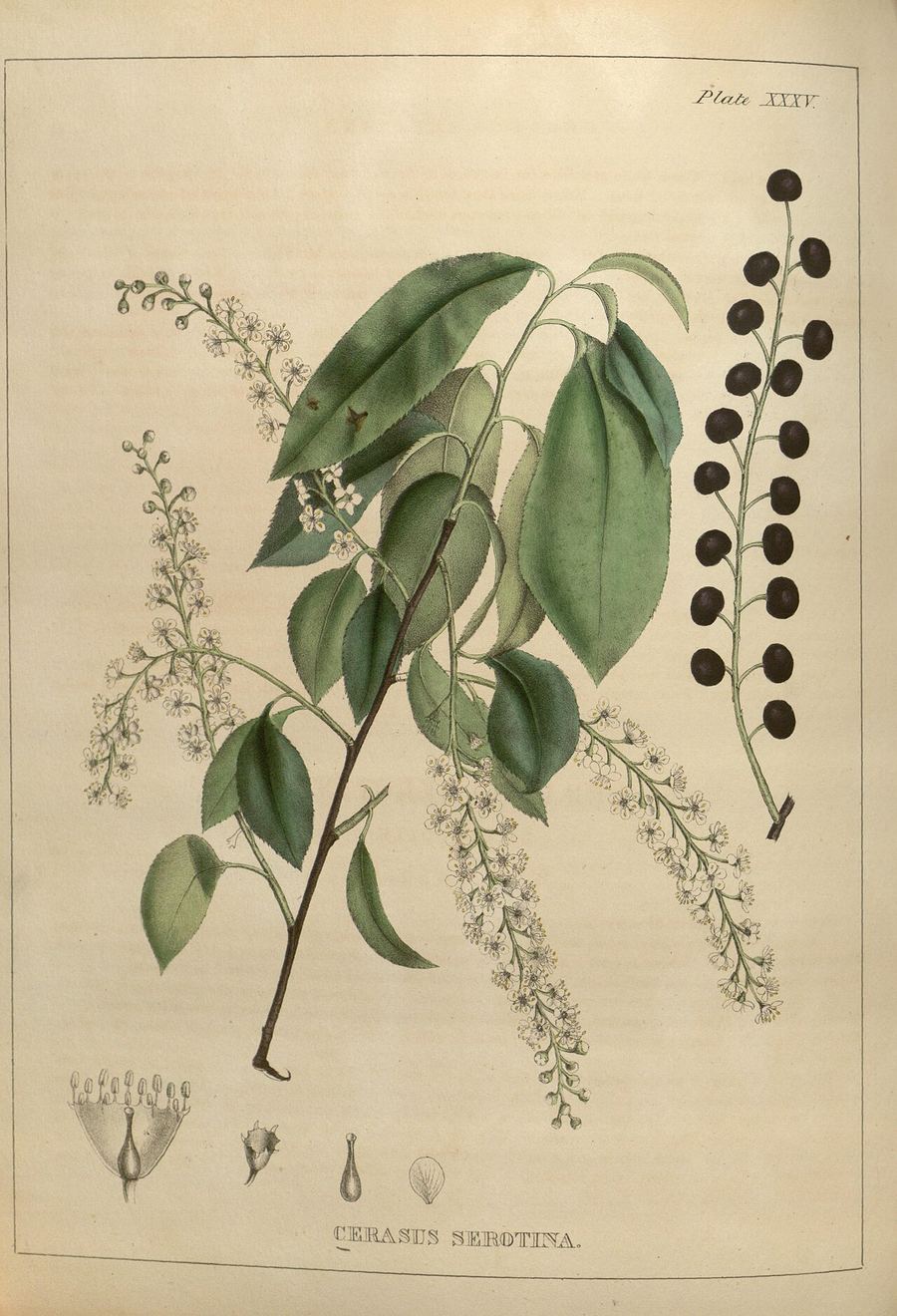
Wild cherry bark
Prunus serotina
Herbs & Roots. Native American and Western & European.
Also called Black cherry, Rum cherry
Can release cyanideThe bark of a North American cherry tree that was long used in cough syrups, but it can release cyanide.
Did you know? Its bark contains the same family of cyanide-releasing chemicals found in bitter almonds.
What it may help, and how strong the proof is
- Sore throat & cough. Used in old cough syrups for a long time. No good human studies exist, and the bark can be toxic.Traditional proof
- Sleep. Folk use as a calming tea. No human studies exist.Traditional proof
Parts of the body
Traditional use
Native peoples and early American settlers used the bark for coughs, colds and digestive upsets. It was a common flavor and ingredient in old cough syrups.
How it is classified
- Herbal actions
- Antitussive, Expectorant. Energy: neutral.
How people take it
Old syrups used small amounts of bark. No safe home dose is known, and making a strong tea or tincture at home is risky.
Tea, tincture and syrup.
Where to get it
A tall tree of eastern and central North America, common in forests and along fences. Bark is cut from branches and dried. Sold as dried bark, tinctures and in some syrups.
Be careful
Crushed or soaked bark releases cyanide. Cyanide poisoning can cause vomiting, headache, confusion and, at high doses, death. Leaves, pits and seeds also contain cyanide-releasing chemicals. Do not give to children, and avoid in pregnancy and breastfeeding.
Avoid if: pregnancy; breastfeeding; children under 12.
Mixing with other things
- Works well together
Old cough syrup blends often combined the two.
The honest take
Wild cherry bark was once common in cough medicine, but there is no modern proof that it eases coughs. It carries a real cyanide risk, so it is not a safe home remedy. Skip it.