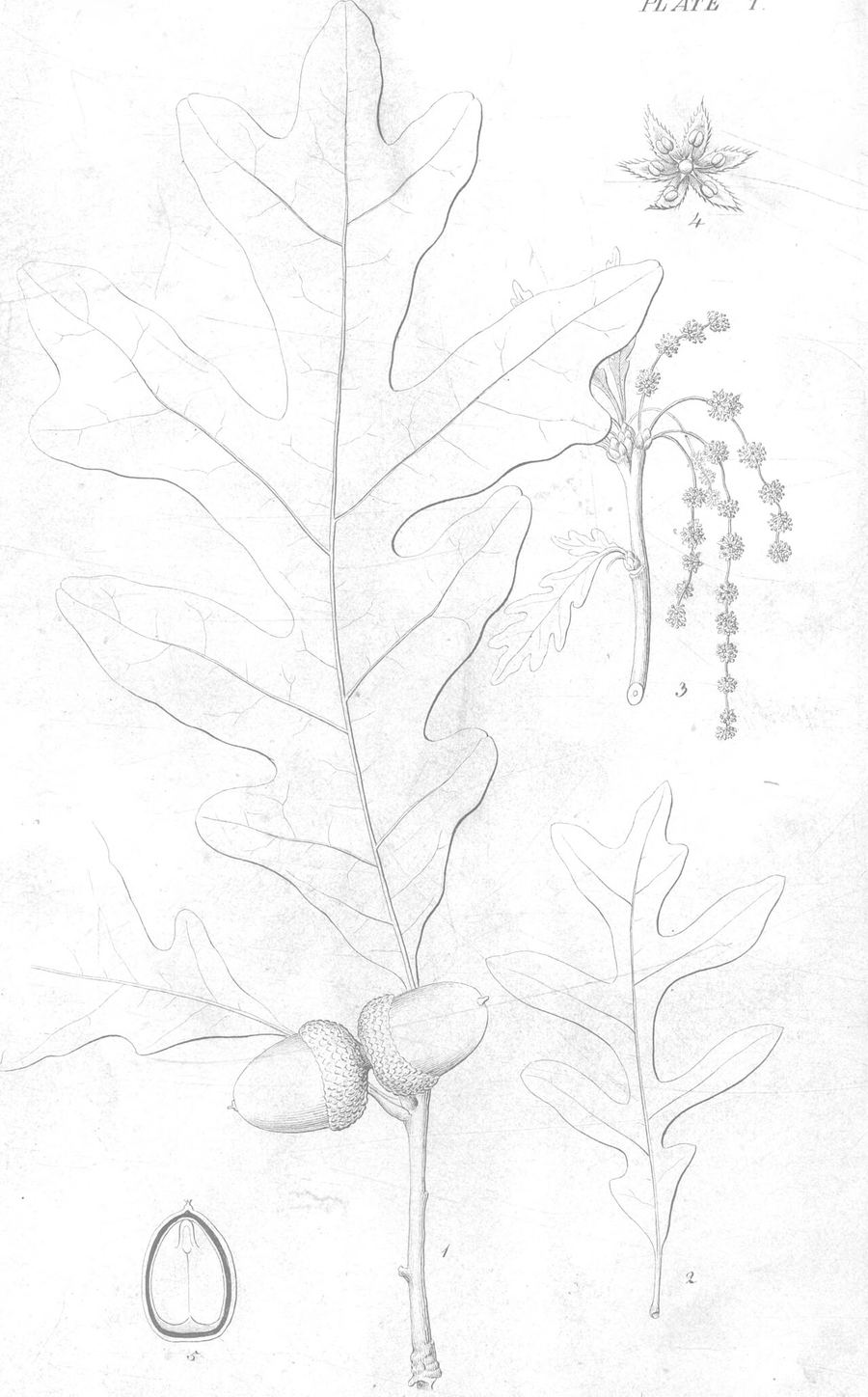
White oak bark
Quercus alba
Herbs & Roots. Native American and Western & European.
Also called White oak, American white oak
Spanish: Roble blanco
Tannins can irritate; limit useBark from a tall American oak, used as a tea or wash for diarrhea and minor skin irritation.
Did you know? White oak wood is watertight because its pores are plugged with tiny cell growths called tyloses, which is why it is used for whiskey barrels.
What it may help, and how strong the proof is
- Digestion & gut health. Used for diarrhea because of its tannins, which tighten tissue. Tradition and lab work; no good human trials.Traditional proof
- Mouth, gums & teeth. Used as a gargle for sore gums and mouth sores. Traditional only.Traditional proof
- Wounds, burns & bites. Used as a wash for minor wounds and skin irritation. Traditional, with little testing.Traditional proof
Parts of the body
Traditional use
Native and early American herbalists used oak bark for wounds, burns, and sore mouths. It was also a common remedy for diarrhea.
How it is classified
- Herbal actions
- Astringent, Antimicrobial. Energy: neutral.
How people take it
Made as a decoction or tea from dried bark, or used as a wash. No tested dose exists.
Decoction, tincture and topical.
Where to get it
White oak grows in eastern North America, and bark is taken from wild or cultivated trees. Dried bark, tinctures, and washes are sold in herb shops.
Be careful
Tannins can irritate the stomach and cause constipation, especially in high doses. Heavy or long use may stress the liver and kidneys. Avoid it in pregnancy and in kidney or liver disease.
Avoid if: pregnancy; kidney disease; liver disease.
Mixing with other things
- Works well together
Both are astringent barks used on skin and minor wounds.
The honest take
White oak bark is a real astringent, and its tannins do tighten tissue. Its use for diarrhea and gargles rests on tradition and lab work, not trials. Long use of high tannin doses is not advised.