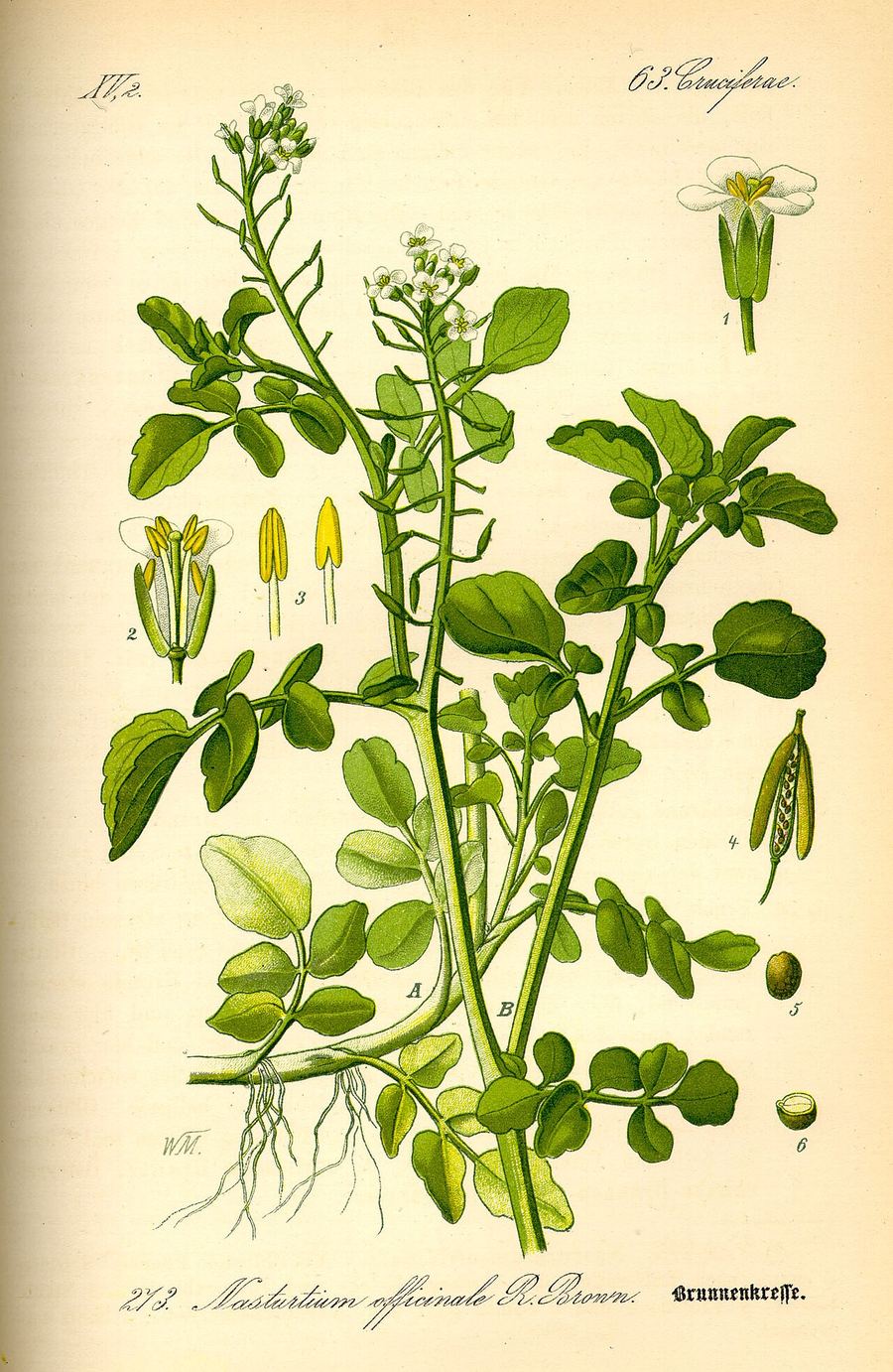
Watercress
Nasturtium officinale
Vegetables. Western & European and Modern nutrition.
Also called Water cress, Common watercress, Berro
Pinyin: Xī Yáng Cài
Spanish: Berro
Wild cress can carry parasitesA peppery leafy plant that grows in cool, running water and is used in salads and soups.
Did you know? Watercress is related to mustard, horseradish and broccoli, and its peppery bite comes from the same family of compounds.
What it may help, and how strong the proof is
- Heart health. Diets rich in greens are linked to lower heart disease in large studies. Watercress has not been tested alone.Early proof
- Cleansing & detox. Old herbal books call it a blood cleanser. No good human evidence shows it removes toxins.Not supported
Parts of the body
Traditional use
Western herbalists used watercress as a spring tonic and to cleanse the blood. That idea is old folklore with no good evidence behind it.
How it is classified
How people take it
Eat 1 cup or more in salads, sandwiches or soups. No dose is proven for any health goal.
Food.
Where to get it
Grows in clean, cool streams and in farmed beds. Sold fresh in bunches or bags. Wild cress can carry liver fluke and other germs, so wash it well or buy farm-grown.
Be careful
Safe as food when washed well. Wild or pond-grown cress can carry liver fluke parasites and E. coli, so cook it or buy from a tested farm. It is high in vitamin K, so people on warfarin should keep their intake steady.
Mixing with other things
- Works well together
Citrus dressings are common with watercress salads and add vitamin C.
- Worth knowingBlood thinners (warfarin, Eliquis, Xarelto, Plavix, daily aspirin)
Vitamin K in watercress can lower warfarin's effect.
The honest take
Watercress is a healthy green, and its nutrients are real. The blood cleansing claim is old folklore with no good evidence. Most of its proof comes from studies of greens in general.