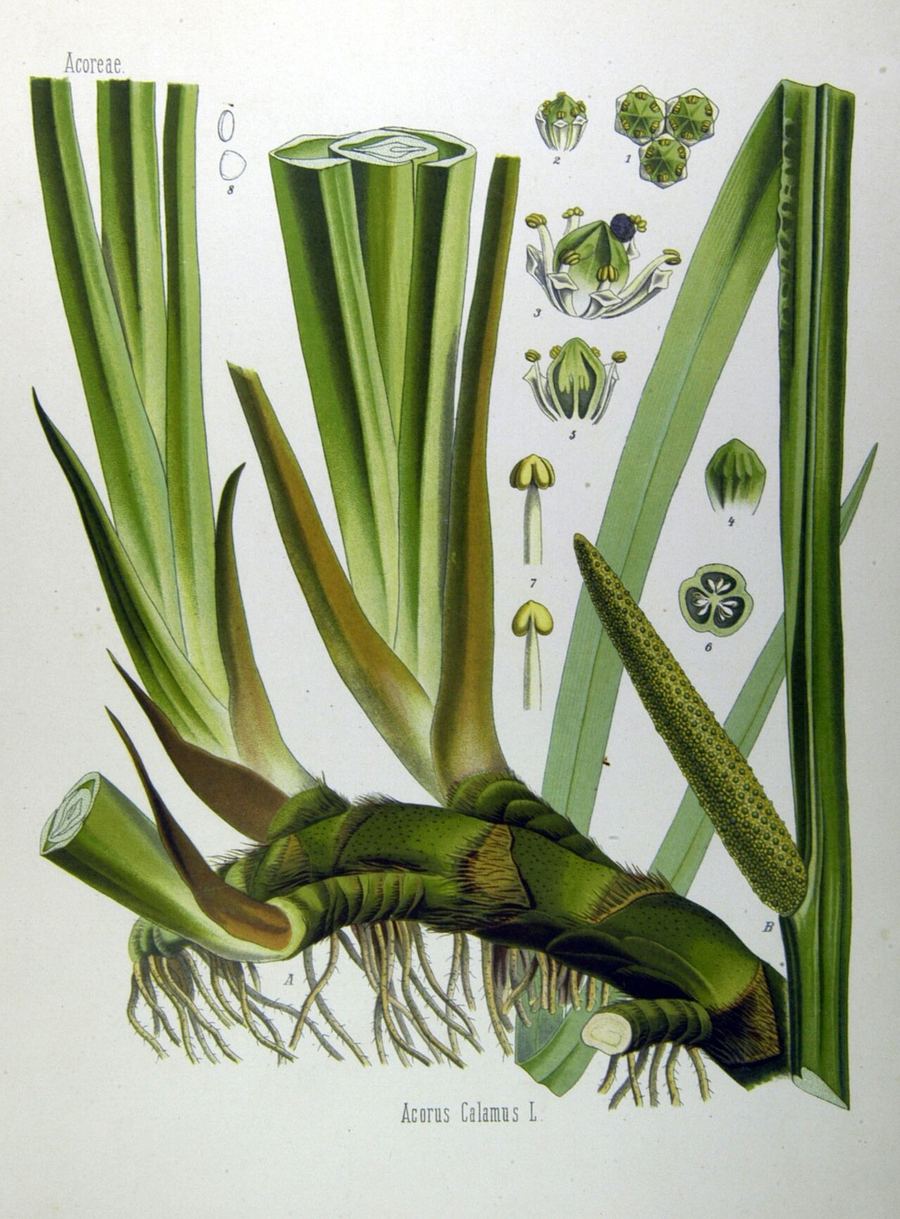
Vacha (sweet flag)
Acorus calamus · वचा
Herbs & Roots. Ayurveda.
Also called Sweet flag, Calamus, Sweet root
Spanish: Cálamo aromático
Sanskrit: वचा (Vacha)
Beta-asarone: cancer risk in rodentsVacha, or sweet flag, is an aromatic root used in Ayurveda for speech, memory and digestion, but its main compound raises safety concerns.
Did you know? The U.S. has banned calamus as a food ingredient since 1968, mainly over concern about a compound called beta-asarone, which caused tumors in rodent studies.
What it may help, and how strong the proof is
- Memory & focus. Traditional memory herb. Evidence is from lab and animal work only.Traditional proof
- Digestion & gut health. Used as a digestive stimulant in tradition. Human trials are lacking, and higher doses carry risk.Traditional proof
Parts of the body
Traditional use
Ayurveda uses vacha for speech, memory and digestion. Classical texts say the raw root must be purified before use.
How it is classified
- Herbal actions
- Brain tonic, Carminative, Expectorant. Energy: warming.
- Ayurveda
- Calms Vata and Kapha. Can raise Pitta. Taste (rasa): pungent, bitter. Energy (virya): heating. After digestion (vipaka): pungent. Medhya (brain tonic), Deepana (kindles digestion).
How people take it
Modern doses are not set, and most experts advise against taking it by mouth. Traditional texts use tiny, purified amounts, so do not self-dose.
Powder and decoction.
Where to get it
Grows in wet, marshy ground across Asia, Europe and North America. Sold as dried root, powder and oil, and calamus is banned as a food ingredient in the U.S.
Be careful
The main concern is beta-asarone, which caused tumors in rodent studies. Large doses can cause vomiting and other serious effects. Avoid in pregnancy, breastfeeding and young children, and avoid oil and essential oils taken by mouth.
Avoid if: pregnancy; breastfeeding; children under 12.
Mixing with other things
No specific mixing notes on file. That doesn't prove it's safe with everything; ask a pharmacist about your full list.
The honest take
Vacha is a historical memory and digestion herb, but its main compound, beta-asarone, is a real safety problem. Human research is missing, and the U.S. has banned calamus as a food ingredient. Ayurveda itself warns that the raw root needs purifying before use, so avoid taking it by mouth.