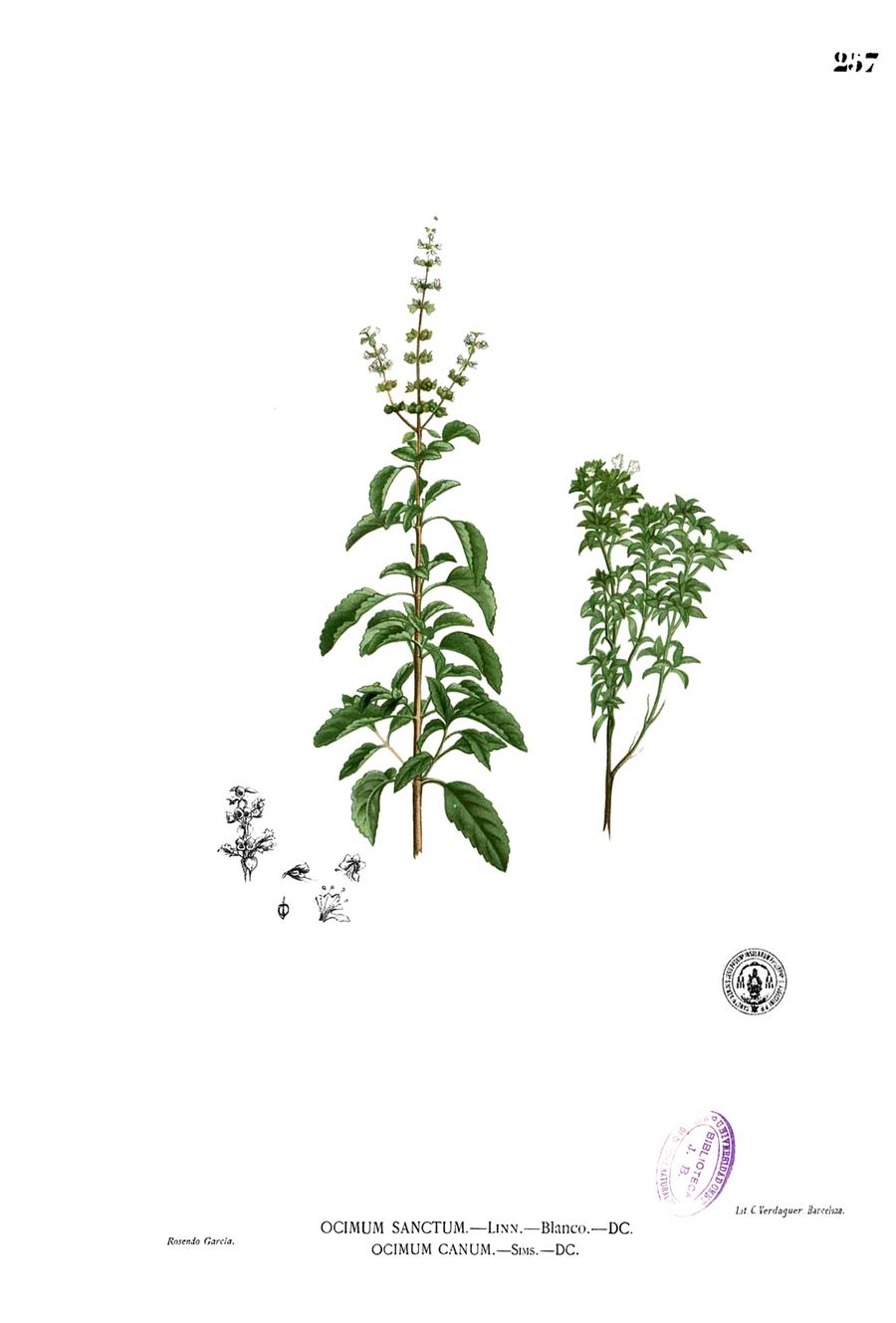
Tulsi (holy basil)
Ocimum tenuiflorum · तुलसी
Herbs & Roots. Ayurveda and Folk & home remedies.
Also called Holy basil, Sacred basil, Tulasi
Spanish: Albahaca sagrada
Sanskrit: तुलसी (Tulsi)
May lower blood sugarHoly basil is a sacred herb of India that is drunk as a tea for stress, colds and general balance, with mostly small or lab-based research.
Did you know? Many Hindu families grow tulsi in a pot near the front door or in the courtyard, and the plant is treated as sacred.
What it may help, and how strong the proof is
- Stress & anxiety. Small human trials report lower stress scores. Results are mixed and the trials are small.Early proof
- Blood sugar. Small trials in people with high blood sugar report modest drops in fasting blood sugar. Larger trials are needed.Early proof
- Sore throat & cough. Long used for coughs and colds in tradition. Human trials are few.Traditional proof
- Infections. Lab studies show activity against some bacteria and fungi. Human proof is lacking.Traditional proof
Parts of the body
Brain & mind, Nerves & pain, Pancreas & blood sugar, Mouth & throat, Lungs, Immune system
Traditional use
In Ayurveda and Hindu home practice, tulsi is used for coughs, colds and fever, and as a daily tea for general health.
How it is classified
- Herbal actions
- Adaptogen, Expectorant, Antimicrobial, Antioxidant. Energy: warming.
- Ayurveda
- Calms Kapha. Can raise Pitta. Taste (rasa): pungent, bitter. Energy (virya): heating. After digestion (vipaka): pungent. Krimighna (anti-parasite), Kasahara (relieves cough).
How people take it
The usual form is tea made with 1 to 2 teaspoons of dried leaves in hot water, one to three times a day. Human trials used leaf extracts, and doses vary widely.
Tea, capsule and tincture.
Where to get it
Native to India and Southeast Asia and grown in gardens worldwide. Sold as dried leaf tea, capsules, tinctures and essential oil, and the essential oil is not for swallowing.
Be careful
Tea is usually well tolerated. Concentrated extracts can cause stomach upset, and lab studies suggest the herb may slow blood clotting. Avoid large amounts in pregnancy because its effects are not well studied.
Avoid if: pregnancy; bleeding disorders; before surgery.
Mixing with other things
- Works well together
Tulsi and ginger are a common tea pair for colds and upset stomach.
- Works well together
Both are used in Ayurvedic fever and immune blends.
- Works well together
Both are Ayurvedic herbs used for cough and cold.
- Use cautionDiabetes medicine (metformin, insulin, glipizide, Ozempic)
May lower blood sugar, adding to the effect of diabetes medicines.
- Use cautionBlood thinners (warfarin, Eliquis, Xarelto, Plavix, daily aspirin)
Lab studies suggest it may slow clotting, which can add to blood thinners.
Adds up with others that may slow blood clotting: , , , , , , , , , , , , , and 40 more.
Adds up with others that may lower blood sugar: , , , , , , , , , , , , , and 39 more.
Found in these formulas
Adaptogen stack (Modern)
The honest take
Tulsi tea is a pleasant, low-risk drink, but most of its health claims come from small trials, lab studies and tradition. The blood sugar and stress results are promising but not proven. Concentrated extracts and essential oil are not the same as tea.