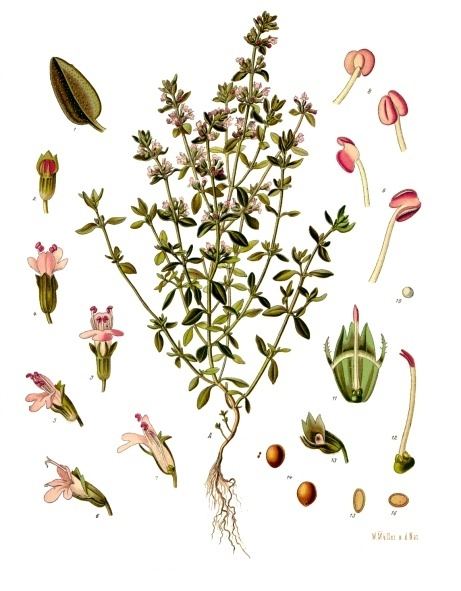
Thyme
Thymus vulgaris
Herbs & Roots. Western & European.
Also called Common thyme, Garden thyme, English thyme
Spanish: Tomillo
Concentrated oil irritates skinThyme is a small aromatic herb used in cooking and tea, and its oil is studied for germ-fighting effects.
Did you know? Thymol, the main compound in thyme oil, is one of the active ingredients in Listerine mouthwash.
What it may help, and how strong the proof is
- Breathing & asthma. Often combined with ivy leaf in cough syrups. Those blends have some trials, but thyme alone has little proof.Traditional proof
- Infections. Its main oil compound, thymol, kills germs in lab tests, but human proof is lacking.Traditional proof
Parts of the body
Traditional use
Ancient Greek and Roman writers praised thyme for coughs and breathing. European folk healers used it for sore throats and bronchitis.
How it is classified
- Herbal actions
- Expectorant, Antimicrobial, Antispasmodic. Energy: warming.
How people take it
Used as food, steeped as tea, or taken as tincture. Thyme oil is strong and must be diluted before use on skin, and it is not for swallowing in large amounts.
Food, tea, tincture and essential oil.
Where to get it
Native to the Mediterranean and widely grown in gardens. Sold as dried leaf, tea, tinctures, essential oil, and cough syrups.
Be careful
Food amounts are safe. Concentrated thyme oil or thymol can irritate the skin, mouth, and stomach. Use it with care in young children, and avoid medicinal amounts in pregnancy.
Avoid if: pregnancy; young children (oil).
Mixing with other things
- Works well together
Both are in Herbes de Provence, a classic herb mix.
- Works well together
Both are in classic poultry seasoning.
- Works well together
Both appear in many Mediterranean and Herbes de Provence blends.
- Works well together
Common together in herb blends and poultry seasonings.
- Works well together
Both are used in cough and chest herbal blends.
- Works well together
Both are used in chest and cough teas in European herbal medicine.
- Works well together
Often blended for chest colds in European herbal tradition.
- Works well together
Thyme and eucalyptus are used together in traditional chest rubs.
- Works well together
Both are classic herbs in Jamaican jerk seasoning.
- Works well together
Core herbs in bouquet garni, a bundle that flavors stocks and stews.
- Works well together
Thyme and ivy are often combined in European cough syrups.
Found in these formulas
Chest & breath tea (Western), Four Thieves vinegar (Folk)
The honest take
Thyme is a safe, tasty herb, and its oil has real germ-fighting activity in the lab. Human evidence is small and mostly comes from combination cough syrups. Thyme alone for infections or sore throats is not well proven.