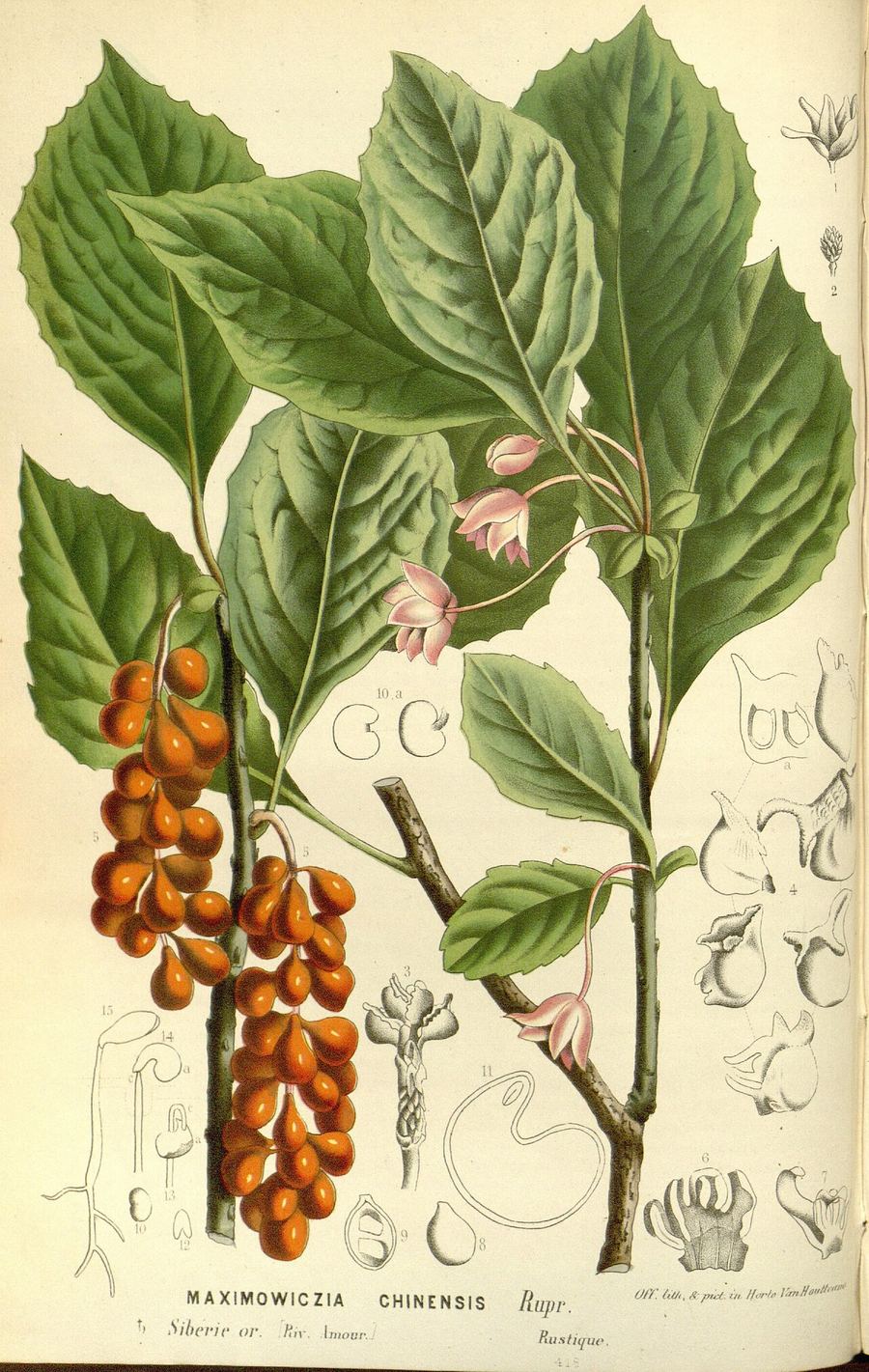
Schisandra
Schisandra chinensis · 五味子
Herbs & Roots. Chinese Medicine and Modern nutrition.
Also called Wu wei zi, Five-flavor berry, Chinese magnolia vine
Pinyin: Wǔ Wèi Zǐ
Possible drug interactionsA red berry used in Chinese medicine to calm coughs and steady sweating. In the West it is sold as an adaptogen for stamina and stress.
Did you know? Its Chinese name means five-flavor fruit, because the berry is traditionally described as tasting sour, sweet, salty, bitter and pungent at once.
What it may help, and how strong the proof is
- Energy & tiredness. Small, mixed trials, mostly from Russia and China, report better stamina under stress. Trials are small and quality varies.Early proof
- Liver. Small, low-quality human trials in hepatitis and fatty liver report better liver enzymes. Animal studies are more consistent.Early proof
- Stress & anxiety. Traditional and adaptogen use for stress. Animal studies show calming effects. Human trials are few.Traditional proof
Parts of the body
Traditional use
Traditional Chinese Medicine uses wu wei zi to stop excess sweating and chronic cough, support kidney essence and calm the spirit. It is a core herb in Sheng Mai San (Pulse Engendering Powder) and Wu Zi Yan Zong Wan (Five Seeds Pill).
How it is classified
- Herbal actions
- Adaptogen, Antitussive, Tonic, Nervine. Energy: warming.
- Chinese medicine
- 五味子 Astringe & stabilize. Nature: warm. Flavour: sour, sweet. Enters the Lung, Heart and Kidney channels.
How people take it
Traditional decoctions often use about 3 to 6 g of dried berries. Extracts and capsules are common, and study doses vary widely.
Decoction, tea, capsule, powder and tincture.
Where to get it
Grows wild in northeast China, Korea, Japan and the Russian Far East. Sold as dried berries, tea, powder, extracts and capsules.
Be careful
Common side effects at higher doses are heartburn, stomach upset, dry mouth, insomnia and headache. Use with care in people with epilepsy.
Avoid if: pregnancy; epilepsy.
Mixing with other things
- Works well together
Both appear in the Chinese formula Sheng Mai San for fatigue and dry mouth. Classic versions use Asian ginseng.
- Works well together
Ginseng, ophiopogon and schisandra make up Sheng Mai San, a classic formula for sweating and fatigue.
- Works well together
Goji and wu wei zi are both in Wu Zi Yan Zong Wan (Five Seeds Pill).
- Works well together
Ophiopogon and schisandra are both in Sheng Mai San.
- Works well together
Tu si zi and wu wei zi are both in Wu Zi Yan Zong Wan (Five Seeds Pill).
- Works well together
Eleuthero and schisandra are both used as adaptogens for fatigue and stress in modern supplement blends.
- Use cautionImmune-suppressing medicine (transplant drugs, some arthritis drugs)
Schisandra may affect immune activity. It may also affect liver enzymes that break down some drugs. Clinical data are limited, so check with a clinician.
- Worth knowingStatins (Lipitor, Zocor, Crestor)
Lab studies suggest schisandra can affect liver enzymes that break down some drugs, including some statins. Human data are limited.
The honest take
Schisandra is a traditional berry with real lab evidence for liver and stress effects. Human trials are small and of mixed quality. Its drug-interaction risk is still uncertain, so check with a clinician if you take prescription medicine.