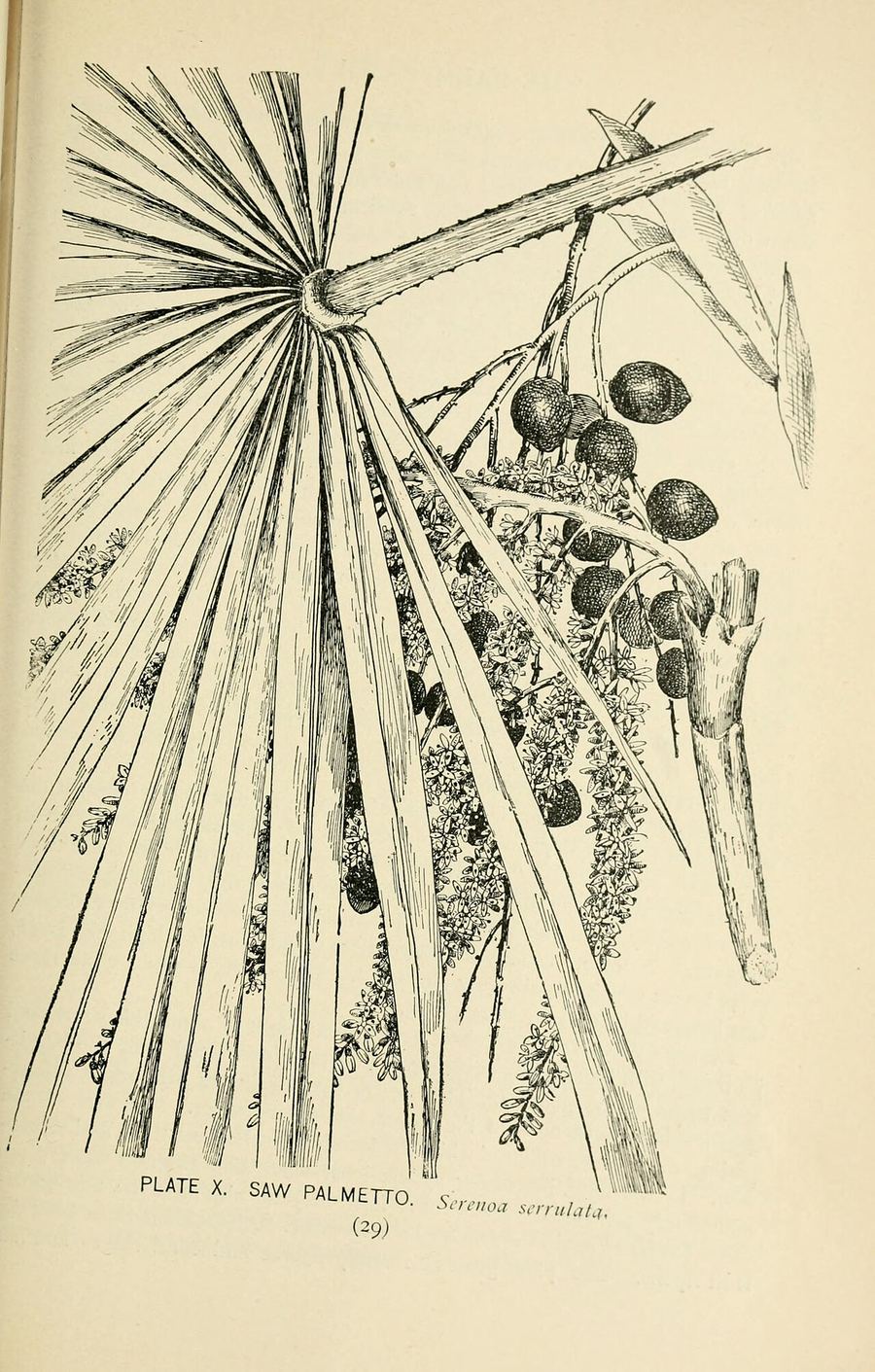
Saw palmetto
Serenoa repens
Herbs & Roots. Native American and Western & European.
Also called Scrub palmetto
Possible bleeding with blood thinnersA low palm of the southeastern United States whose dark berries are sold as a supplement for prostate symptoms.
Did you know? Its name comes from the sharp, saw-like teeth along the edges of its leaf stalks.
What it may help, and how strong the proof is
- Hair & nails. Sold for hair loss. Studies are few and mixed.Traditional proof
- Men's health. Sold for enlarged prostate symptoms. A 2024 Cochrane review of 27 trials found it no better than placebo for symptoms or quality of life.Not supported
Parts of the body
Traditional use
Native peoples of Florida ate the berries and used them in remedies. Later, Eclectic doctors used the berries for urinary and reproductive complaints.
How it is classified
- Herbal actions
- Diuretic, Hormone balancer. Energy: neutral.
How people take it
Most products are capsules or softgels of dried berry extract. Trials used about 320 mg a day of a standard extract. Do not rely on it for urinary symptoms without a checkup.
Capsule, tincture and powder.
Where to get it
Grows as a low, fan-leaved palm in sandy soils of the southeastern United States, especially Florida. Most berries are wild-harvested. Sold as capsules, softgels, liquid extracts and in men's blends.
Be careful
Usually mild, with stomach upset, nausea, headache or constipation. Rare reports of bleeding problems and hormone changes exist. Tell your doctor before any prostate testing, since supplements can affect results. Avoid in pregnancy and with prostate cancer.
Avoid if: pregnancy; bleeding disorders; prostate cancer.
Mixing with other things
- Works well together
Both are used for prostate symptoms. Pygeum has a few small trials, mixed in quality.
- Works well together
Nettle root, a separate part of the same plant, is a traditional partner for urinary and prostate symptoms.
- Use cautionBlood thinners (warfarin, Eliquis, Xarelto, Plavix, daily aspirin)
May add to bleeding risk with blood thinners. Evidence is limited.
Adds up with others that may slow blood clotting: , , , , , , , , , , , , , and 40 more.
The honest take
Saw palmetto is a popular prostate supplement, but good-quality trials pooled in a 2024 review found it no better than placebo for urinary symptoms. Trouble passing urine can signal serious problems, so see a doctor rather than rely on it. Supplement quality varies widely.