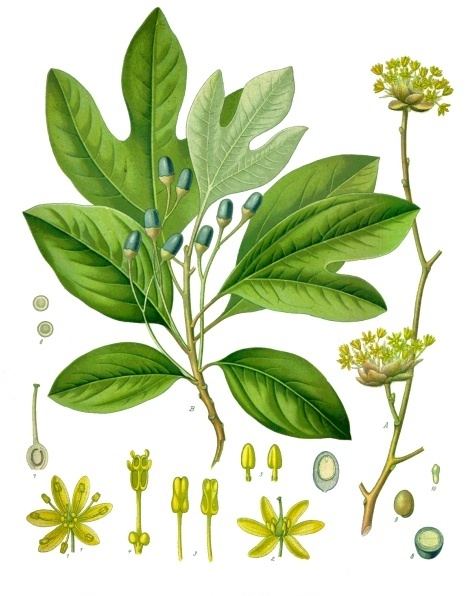
Sassafras
Sassafras albidum
Herbs & Roots. Native American and Western & European.
Also called Ague tree, Saloop
Spanish: Sasafrás
Contains cancer-linked safroleAn eastern North American tree whose root bark once flavored root beer, but it is now banned as a food ingredient.
Did you know? One sassafras tree can grow three different leaf shapes: plain oval, mitten-shaped and three-lobed.
What it may help, and how strong the proof is
- Skin. Folk wash for sores and rashes. No human studies exist.Traditional proof
- Cleansing & detox. Old tonics claimed it cleanses the blood. No evidence supports this.Not supported
Parts of the body
Traditional use
Native peoples used the root bark and leaves for skin problems and fevers. Colonial settlers drank sassafras tea each spring as a blood-cleansing tonic.
How it is classified
- Herbal actions
- Diaphoretic, Alterative. Energy: warming.
How people take it
Not recommended for any use. Old recipes made tea from the root bark. Do not make tea, root beer or oil from it at home.
Tea.
Where to get it
Grows in old fields, woods and roadsides of eastern North America. Root bark is dug and dried. Sold as dried root bark and oil in some shops. Modern root beer uses other flavors.
Be careful
Contains safrole, a chemical that caused liver cancer in lab rats fed very high doses. Federal rules have barred safrole from food since 1960. Safrole can also harm the liver. Avoid in pregnancy, breastfeeding, and with liver disease, and keep away from children.
Avoid if: pregnancy; breastfeeding; children under 12; liver disease.
Mixing with other things
- Works well together
Both were used in old spring tonics and early root beer. Both contain safrole, so the pairing is not advised.
The honest take
Sassafras root bark was once used in root beer and tea, but its main chemical, safrole, caused liver cancer in lab rats fed very large doses. There is no good human proof of benefit for cleansing the blood. Skip it.