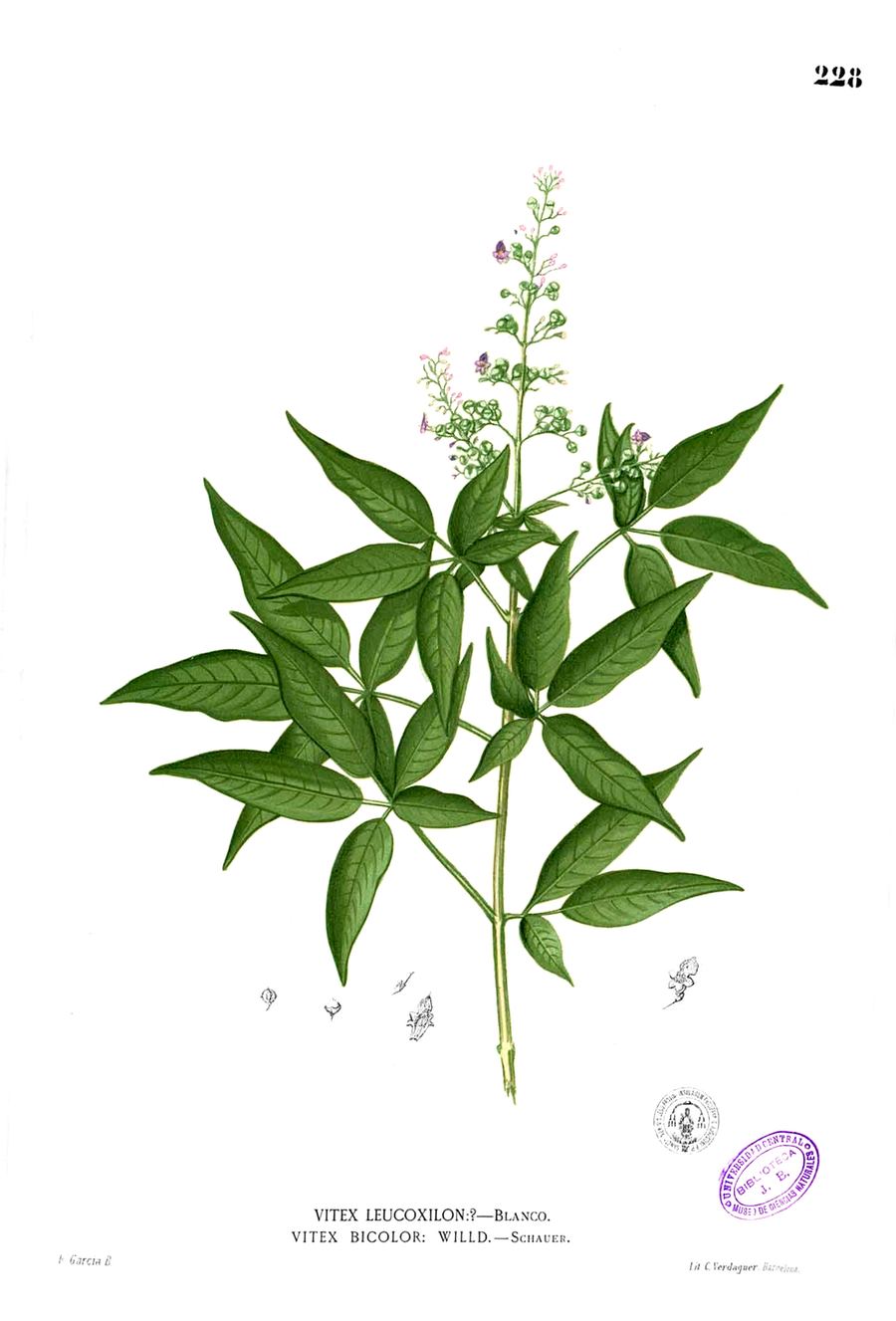
Nirgundi
Vitex negundo · 黄荆
Herbs & Roots. Ayurveda and Chinese Medicine.
Also called Five-leaved chaste tree, Sindhuvara, Lagundi, Huang jing
Pinyin: Huáng Jīng
Sanskrit: निर्गुण्डी (Nirgundi)
Few human safety studiesA shrub from India and Asia, used in Ayurveda for pain and swelling and in Chinese medicine for colds and cough.
Did you know? Its leaves usually split into five leaflets, which is where the common name five-leaved chaste tree comes from.
What it may help, and how strong the proof is
- Joint pain & arthritis. Traditional use for joint and muscle pain. Human trials are few.Traditional proof
- Inflammation. Lab and animal studies show anti-inflammatory action. Human evidence is lacking.Traditional proof
Parts of the body
Traditional use
Ayurveda uses nirgundi for joint and muscle pain, swelling and parasites. Chinese medicine uses the fruit (huang jing zi) to release wind-cold colds and ease cough and stomach pain.
How it is classified
- Herbal actions
- Anti-inflammatory, Analgesic. Energy: warming.
- Ayurveda
- Calms Vata and Kapha. Taste (rasa): bitter, pungent. Energy (virya): heating. After digestion (vipaka): pungent. Krimighna (anti-parasite), Vishaghna (counters toxins).
- Chinese medicine
- 黄荆 Release the exterior. Nature: warm. Flavour: pungent, bitter. Enters the Lung, Stomach and Liver channels.
How people take it
Leaf or fruit decoction in tradition. No tested human dose is established.
Decoction, tea and powder.
Where to get it
Grows wild across India, China and Southeast Asia, often along roads and field edges. Leaves and dried fruit are sold in herb shops. Leaf and fruit products are different, so check which part is sold.
Be careful
Few human safety studies exist. Avoid in pregnancy and breastfeeding.
Avoid if: pregnancy; breastfeeding; children under 12.
Mixing with other things
No specific mixing notes on file. That doesn't prove it's safe with everything; ask a pharmacist about your full list.
The honest take
Nirgundi is a long-used Ayurvedic and Chinese herb for pain, swelling and colds. Its human evidence is thin, and most support comes from lab and animal studies. Sources also disagree on its taste and dosha effects.