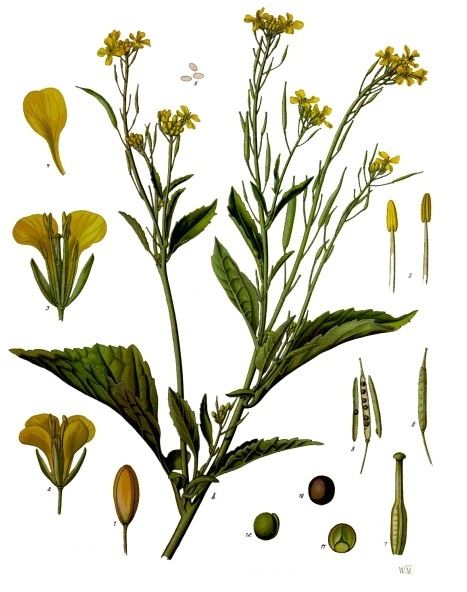
Mustard seed
Brassica juncea / Sinapis alba · 芥子
Spices. Ayurveda and Chinese Medicine.
Also called Brown mustard, Indian mustard, Yellow mustard, White mustard
Pinyin: Jiè Zǐ
Spanish: Mostaza
Sanskrit: सर्षप (Sarshapa)
Common allergen; can blister skinTiny seeds from mustard plants, ground into condiments or cooked whole in Indian food, and used in Ayurvedic and Chinese medicine.
Did you know? The English word mustard may come from the Latin mustum, meaning new wine, because the seeds were once mixed with grape juice to make a condiment.
What it may help, and how strong the proof is
- Breathing & asthma. Chinese medicine uses it for chest congestion with cold phlegm. No good human trials test this.Traditional proof
- Pain & headaches. Mustard oil and plasters are used on sore muscles to cause a warming, irritating feeling on the skin. Proof is mainly tradition.Traditional proof
- Digestion & gut health. Whole and ground seeds are used as a digestive spice. Trials are missing.Traditional proof
Parts of the body
Traditional use
Ayurveda uses sarshapa (mustard seed) to kindle digestion. Chinese medicine uses mustard seed (jie zi) to warm the lungs and move cold phlegm, and Indian households massage mustard oil into the skin.
How it is classified
- Herbal actions
- Expectorant, Carminative, Analgesic. Energy: warming.
- Ayurveda
- Calms Vata and Kapha. Can raise Pitta. Taste (rasa): pungent, bitter. Energy (virya): heating. After digestion (vipaka): pungent. Deepana (kindles digestion).
- Chinese medicine
- 芥子 Transform phlegm & stop cough. Nature: warm. Flavour: pungent. Enters the Lung channel.
How people take it
Seeds are fried whole in oil for Indian cooking, and ground for condiments and pickles. Plasters and oils go on skin for a short time only, since they can burn if left on too long.
Food, powder and topical.
Where to get it
Grown in India, Canada, Europe and elsewhere. Sold as whole seeds, ground powder, prepared mustard, and mustard oil for cooking in South Asia.
Be careful
Mustard is a common food allergen, and allergic reactions can be severe. Ground mustard can irritate eyes, nose and the gut. Mustard plasters can blister skin.
Avoid if: mustard allergy; stomach ulcers; broken skin.
Mixing with other things
- Works well together
Mustard seeds are popped in oil with curry leaves.
- Works well together
Used together in Indian tempering oils and curries.
- Works well together
Core seeds in Indian pickles and spice blends.
- Works well together
A common pair in Indian tempering and pickling.
- Works well together
Both are sharp mustard-family condiments used in sauces.
The honest take
Mustard seed is a flavorful spice with real traditional use, but modern human trials are missing. Health claims rest mostly on tradition and lab studies. Its allergy risk is real and can be serious.