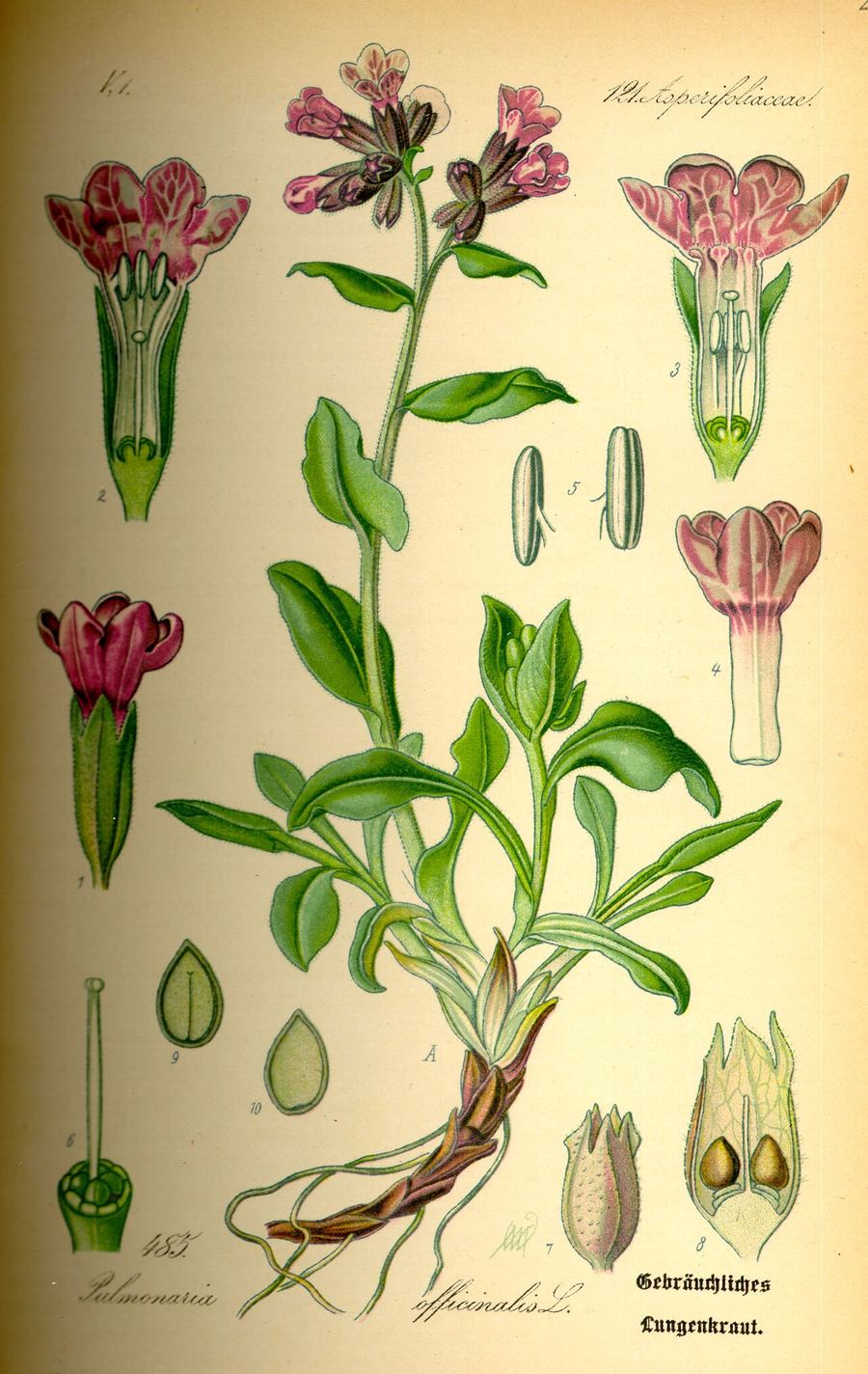
Lungwort
Pulmonaria officinalis
Herbs & Roots. Western & European.
Also called Soldiers and sailors, Jerusalem cowslip
Spanish: Pulmonaria
Few safety studiesA spring woodland plant with spotted leaves that was once used for chest complaints.
Did you know? Its spotted leaves inspired the Doctrine of Signatures, an old belief that a plant's look hints at what it heals. Here the spots were said to resemble diseased lungs.
What it may help, and how strong the proof is
- Breathing & asthma. Traditional tea for coughs and bronchitis. No human studies were found.Traditional proof
- Sore throat & cough. Used to soothe sore throats. Mostly tradition.Traditional proof
Parts of the body
Traditional use
European herbalists brewed the leaves for coughs and bronchitis for centuries. Modern scientists reject the old lung-shape idea.
How it is classified
- Herbal actions
- Expectorant, Demulcent, Astringent. Energy: cooling.
How people take it
Tea is usually 1 to 2 teaspoons of dried leaf per cup, up to three cups a day. There are no trial-based doses.
Tea and tincture.
Where to get it
Grows in shady woods and gardens across Europe and western Asia. Sold as dried leaf for tea and sometimes as tinctures. It is uncommon in stores.
Be careful
Few safety studies exist. Some related plants contain liver-harming pyrrolizidine alkaloids, and the risk for this species is not well measured. Avoid it in pregnancy and breastfeeding.
Avoid if: pregnancy; breastfeeding; liver disease.
Mixing with other things
- Works well together
Common in traditional chest and cough teas.
- Works well together
Both are soothing, slippery herbs for coughs and sore throats.
- Works well together
Often blended for chest colds in European herbal tradition.
The honest take
Lungwort has a long folk history, but there are no human studies showing it helps chest problems. Its safety record is incomplete, and related plants contain liver-harming chemicals. Its lung use rests on tradition, not proof.