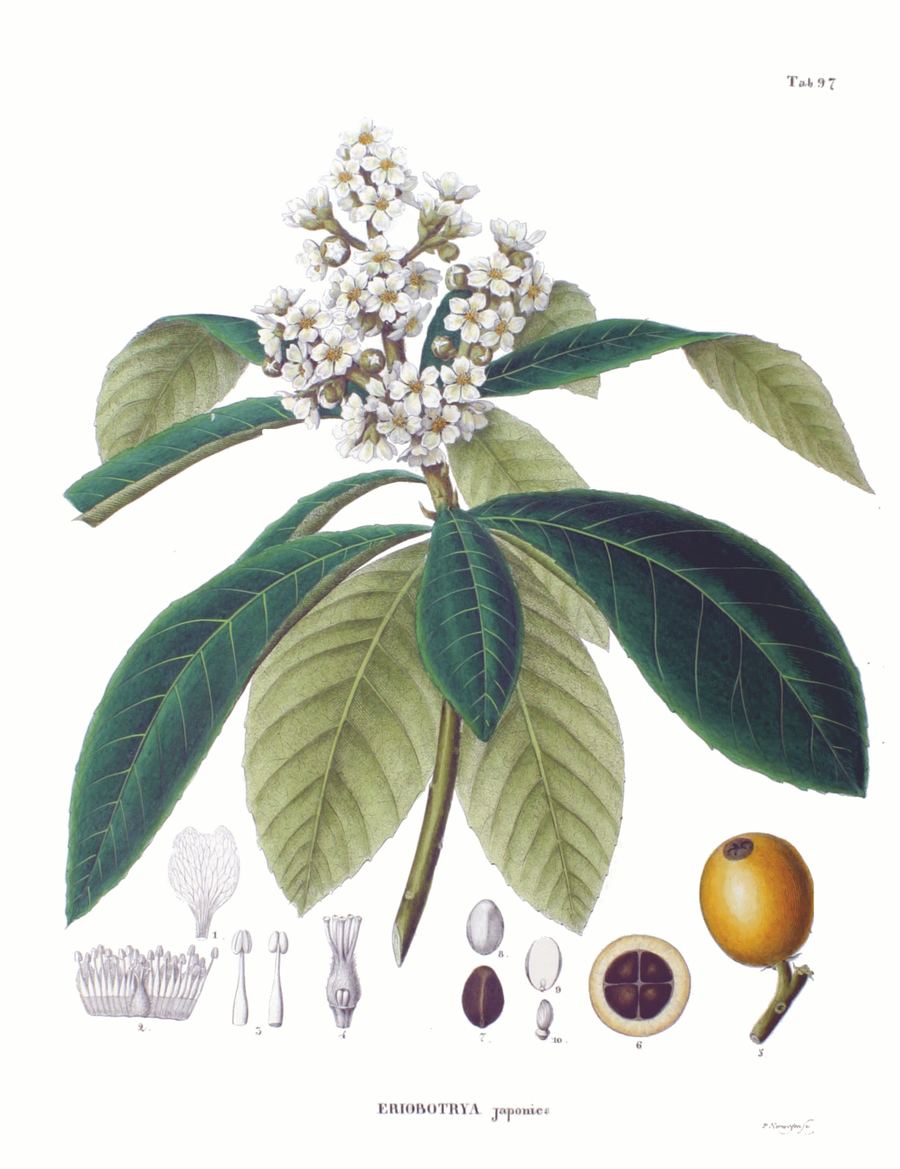
Loquat leaf (pi pa ye)
Eriobotrya japonica · 枇杷叶
Herbs & Roots. Chinese Medicine.
Also called Pi pa ye, Japanese plum leaf, Biwa leaf
Pinyin: Pí Pá Yè
Spanish: Níspero del Japón
Hairs can irritate the throatA leaf from the loquat tree, used in Chinese medicine and cough syrups for coughs with phlegm.
Did you know? The Chinese name pi pa is also the name of a lute, because the fruit's shape looks like the body of the instrument.
What it may help, and how strong the proof is
- Breathing & asthma. Used for cough with phlegm in tradition. Mouse studies show less cough, but we found no good human trials.Traditional proof
- Nausea & upset stomach. Used to settle upset stomach and vomiting in tradition. Human proof is lacking.Traditional proof
Parts of the body
Traditional use
Chinese medicine uses loquat leaf to clear the lungs, calm cough, and settle a rising stomach that causes nausea. Its fine leaf hairs are removed before use.
How it is classified
- Herbal actions
- Expectorant, Antitussive. Energy: cooling.
- Chinese medicine
- 枇杷叶 Transform phlegm & stop cough. Nature: cool. Flavour: bitter. Enters the Lung and Stomach channels.
How people take it
Traditional decoctions use about 6 to 10 grams of leaf. Commercial syrups use other amounts, so follow the label.
Tea, syrup and decoction.
Where to get it
Grown in China, Japan, and other warm regions. Sold as dried leaf for tea and in cough syrups. Leaf hairs can irritate the throat, so good products remove them.
Be careful
Generally low risk in usual amounts. Leaf hairs can irritate the throat if they are not removed. Do not use the seeds, because they contain cyanide-forming compounds.
Mixing with other things
- Works well together
Both are used together in cough blends that loosen phlegm.
The honest take
Loquat leaf is a long-used Chinese cough herb. In our search we found mouse studies and marketing, but no good human trials. Do not use the seeds, and only use the leaf in a product that removes the hairs.