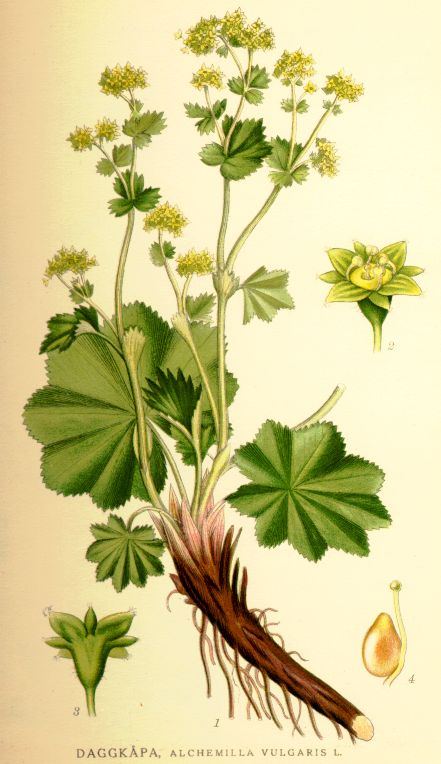
Lady's mantle
Alchemilla vulgaris
Herbs & Roots. Western & European.
Also called Alchemilla, Lion's foot
Avoid in pregnancyA soft-leaved meadow herb used as tea for women's health, heavy periods, and minor wounds.
Did you know? Its name is linked to alchemy, because alchemists collected the dew that gathers on its leaves for their work.
What it may help, and how strong the proof is
- Women's health. Used for heavy periods and hormone balance. Traditional only, with no good human trials.Traditional proof
- Digestion & gut health. Used for diarrhea because of its tannins. Evidence is traditional and from lab work.Traditional proof
Parts of the body
Traditional use
Medieval European herbalists used it for women's problems, especially heavy bleeding, and for wounds and diarrhea.
How it is classified
- Herbal actions
- Astringent, Hemostatic. Energy: neutral.
How people take it
Tea is made from dried leaves and flowers. No standard dose has been set.
Tea and tincture.
Where to get it
Lady's mantle grows in meadows and mountains across Europe, Asia, and North America. Dried herb, tea, and tincture are sold in herb shops, and wild plants are often picked.
Be careful
Tannins can upset the stomach and may reduce iron absorption when taken with iron pills, though this is a theory. There are no good safety studies in pregnancy or breastfeeding, so avoid it then. Long use of tannin-rich herbs can cause constipation.
Avoid if: pregnancy; breastfeeding.
Mixing with other things
- Works well together
Both are astringent herbs used in old women's herbal blends.
- Works well together
Both have been used in folk remedies for heavy bleeding.
The honest take
Lady's mantle has a long folk record for women's health and wounds. Human trials are missing, so its use for heavy periods is unproven. Its tannins may explain the mild use for diarrhea, but the women's health claims are not proven.