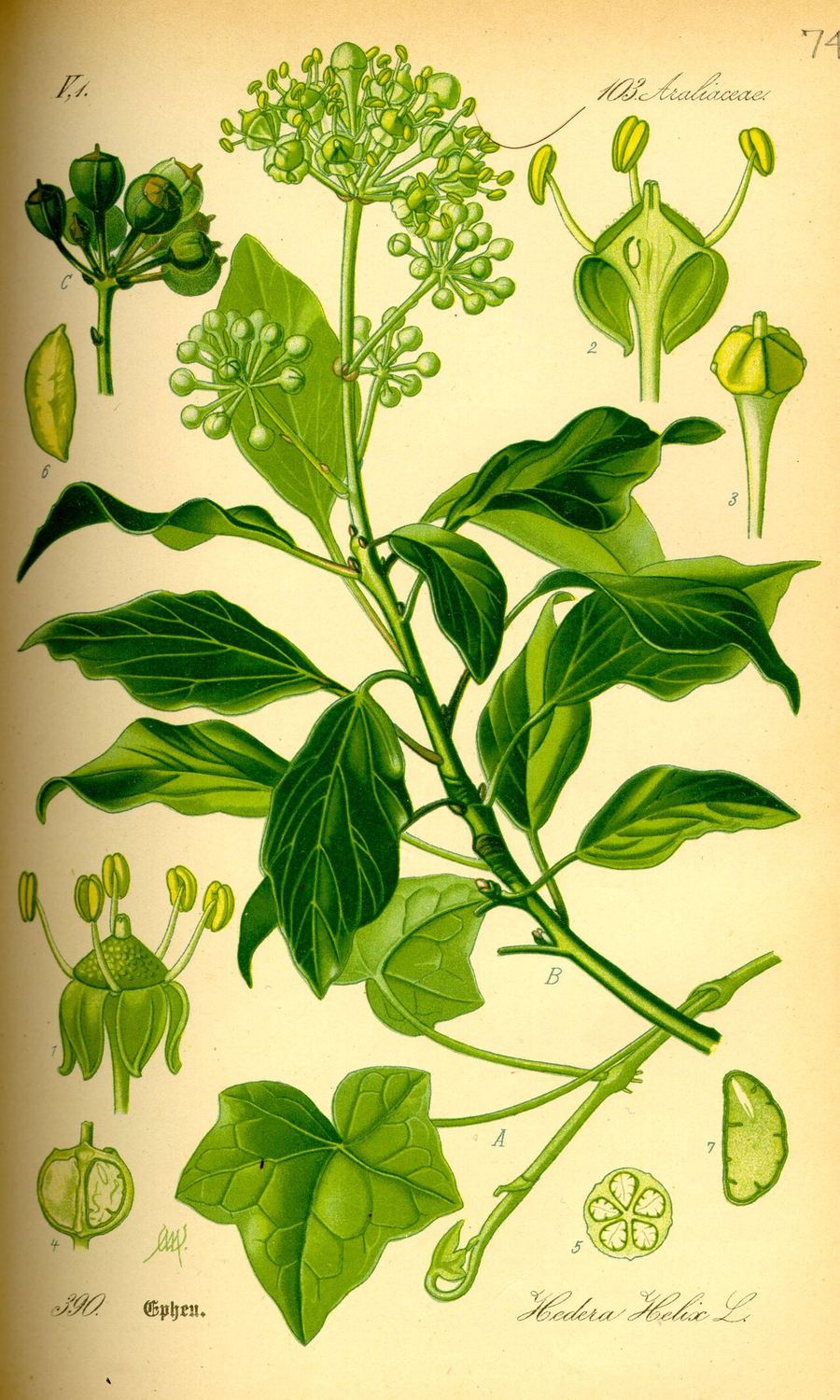
Ivy leaf
Hedera helix
Herbs & Roots. Western & European.
Also called English ivy, Common ivy
Spanish: Hiedra
Berries are poisonous; leaves irritateLeaves of English ivy, made into syrups and extracts that Europeans use for coughs.
Did you know? Ivy climbs walls with tiny roots that release a sticky, glue-like substance that holds it to the surface.
What it may help, and how strong the proof is
- Sore throat & cough. Some trials show faster relief from cough in bronchitis and colds. The benefit may be small, and many studies have weak design.Early proof
- Breathing & asthma. Traditional use for wheezing and asthma-like breathing. No good human trials show this.Traditional proof
Parts of the body
Traditional use
European folk healers used ivy for coughs and chest colds. Ancient Greek writers also described ivy as a medicine.
How it is classified
- Herbal actions
- Expectorant, Antispasmodic. Energy: neutral.
How people take it
Products are standardized to ivy saponins and are usually taken two or three times a day, following the label. A cough that lasts more than three weeks needs a doctor's check.
Syrup, tincture and tea.
Where to get it
Grows on walls, trees, and forest floors across Europe, western Asia, and North Africa. Leaves are dried and made into syrups, dry extracts, and tinctures, sold mostly in Europe.
Be careful
Leaves, stems, and berries contain saponins that can cause stomach upset, vomiting, or diarrhea. Berries can poison children, and adults who eat many. Some people get a skin rash from handling the plant.
Avoid if: pregnancy; breastfeeding; children under 2.
Mixing with other things
- Works well together
Thyme and ivy are often combined in European cough syrups.
- Works well together
Marshmallow soothes the throat and is often added to cough mixes with other herbs.
The honest take
Ivy leaf extract has some trial support for easing cough from bronchitis and colds, but the benefit may be small and many studies are weak. It is not proven for asthma. Raw plant parts are not safe to eat, so use only products from trusted brands.