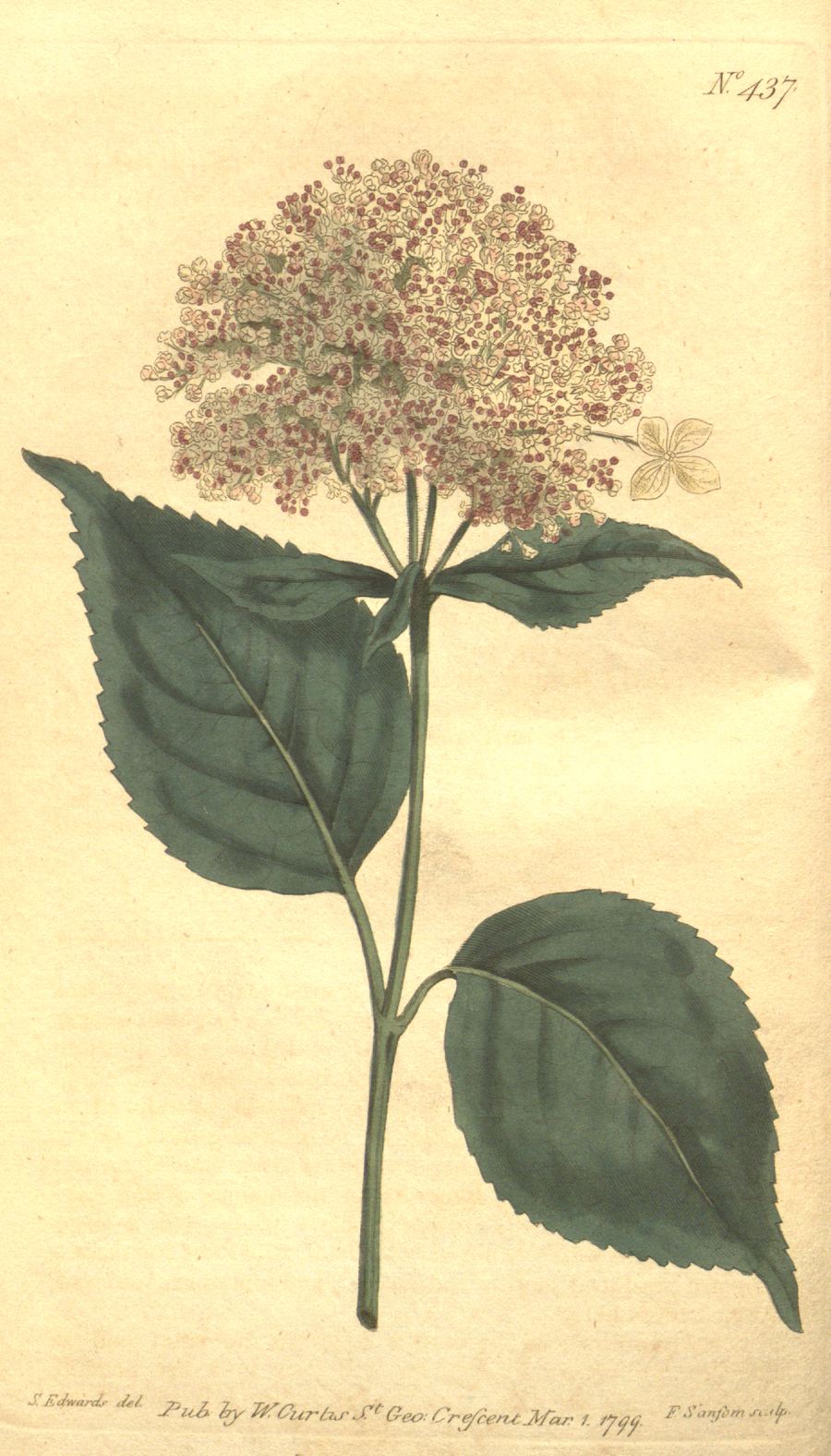
Hydrangea root
Hydrangea arborescens
Herbs & Roots. Dr. Sebi's list and Native American.
Also called Wild hydrangea, Smooth hydrangea, Hortensia
Spanish: Hortensia
Can release cyanideThe root of a wild shrub from eastern North America, used by Native peoples for kidney and urinary complaints. It contains compounds that can release cyanide.
Did you know? The name hydrangea comes from Greek words meaning water vessel, because its seed capsules look like little pots.
What it may help, and how strong the proof is
- Kidneys, bladder & UTIs. Long used for kidney stones and bladder complaints. Little good research exists, and the results conflict.Traditional proof
- Inflammation. Lab studies hint at anti-inflammatory effects. No human trials were found.Traditional proof
Parts of the body
Traditional use
Cherokee and other Native peoples used the root for kidney stones and bladder problems. Early settlers learned the use from them.
How it is classified
- Herbal actions
- Diuretic, Anti-inflammatory. Energy: neutral.
How people take it
The root is simmered into a tea or taken as a tincture. Some monographs warn that more than 2 grams of dried root can cause dizziness and chest tightness.
Decoction and tincture.
Where to get it
Grows wild in eastern North America and in gardens. Sold as dried root, tinctures and capsules. Leaves, buds and flowers should not be eaten.
Be careful
Buds, flowers and leaves contain amygdalin, which can release cyanide. Large amounts can cause dizziness and chest tightness. Safety in pregnancy is not established. Delayed care for kidney stones can cause lasting kidney damage.
Avoid if: pregnancy; breastfeeding; kidney stones; kidney disease.
Mixing with other things
No specific mixing notes on file. That doesn't prove it's safe with everything; ask a pharmacist about your full list.
The honest take
Hydrangea root has a long Native American record for kidney stones, but no good human trials test it. Claims that it dissolves stones are not supported. It contains compounds that can release cyanide, so use caution.