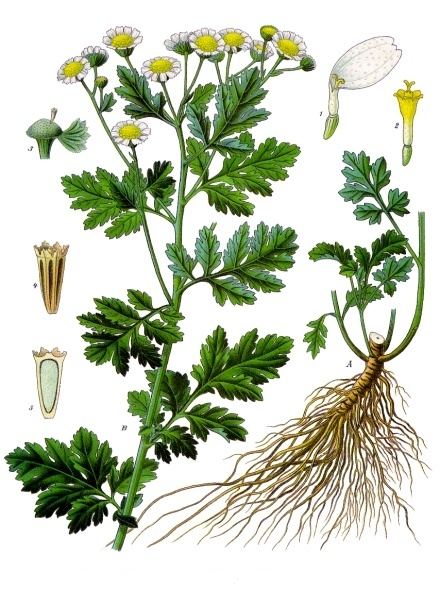
Feverfew
Tanacetum parthenium
Herbs & Roots. Western & European.
Also called Featherfew, Bachelor's buttons, Midsummer daisy
Bleeding risk; avoid in pregnancyA small daisy-like plant studied for preventing migraine headaches.
Did you know? Its common name comes from an old use against fever, since febrifuge means something that lowers fever.
What it may help, and how strong the proof is
- Pain & headaches. Used to prevent migraines. A 2025 analysis of nine placebo-controlled trials found modest drops in attacks. A 2015 Cochrane review said the case rested on one mid-sized study.Early proof
- Fever. Traditional fever remedy. Little human research exists.Traditional proof
Parts of the body
Traditional use
Medieval and later herbalists used the leaves for fevers, headaches, and aches. Its use for migraine is more modern, with serious study beginning in the 1980s.
How it is classified
- Herbal actions
- Anti-inflammatory, Antispasmodic, Emmenagogue. Energy: warming.
How people take it
Trials often used 50 to 150 mg of dried leaf a day, usually for several months. Fresh leaves are very bitter and can irritate the mouth.
Capsule, tea and tincture.
Where to get it
Grows in gardens and wild across Europe and Asia, and is common in North America. Sold as dried leaf, capsules, and tinctures. Standardized products are the most consistent.
Be careful
Mouth sores, bloating, and gas are common. Stopping suddenly can cause rebound headaches, anxiety, and joint pain, so taper off with a doctor's help. Avoid it in pregnancy, since it may stimulate the uterus. People allergic to ragweed or other daisies may react.
Avoid if: pregnancy; ragweed allergy; bleeding disorders.
Mixing with other things
- Works well together
Both have been studied for migraine prevention, with mixed results.
- Works well together
Sometimes used together for migraine relief, based on small studies.
- Use cautionBlood thinners (warfarin, Eliquis, Xarelto, Plavix, daily aspirin)
Slows platelets, so bleeding may be easier with warfarin, aspirin, or similar drugs.
Adds up with others that may slow blood clotting: , , , , , , , , , , , , , and 40 more.
The honest take
Feverfew has some human evidence for fewer migraine attacks, but the results are modest and mixed. It is not a proven migraine fix, and many people notice no change. Stopping suddenly can bring rebound symptoms.