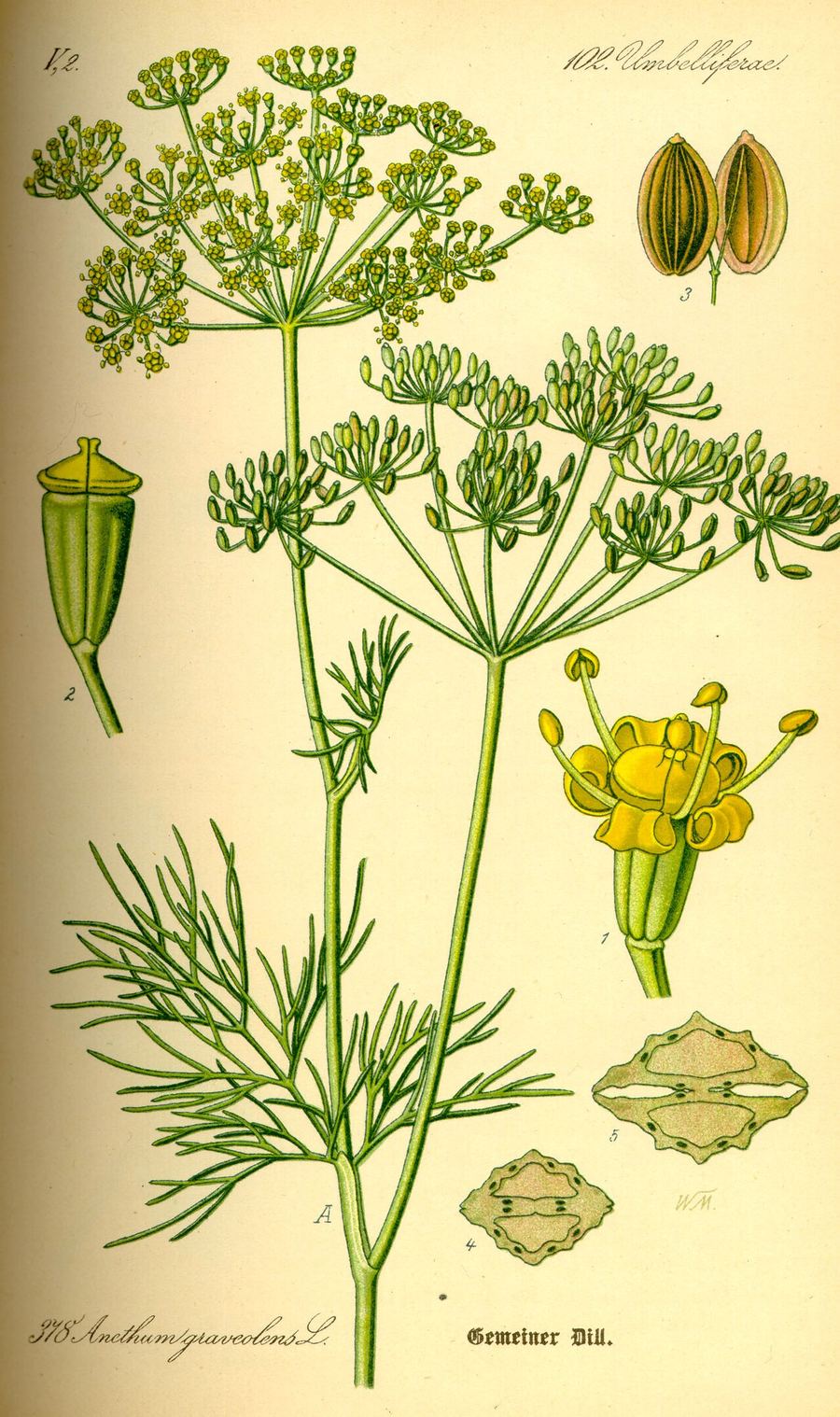
Dill
Anethum graveolens
Herbs & Roots. Western & European.
Also called Dill weed, Dill seed, Garden dill
Pinyin: Shí Luó
Spanish: Eneldo
A feathery herb from the carrot family, used fresh for its leaves and dried for its seeds in pickles, fish and soups.
Did you know? Dill's name may come from an old Norse word meaning to lull, which fits its long use as a baby remedy.
What it may help, and how strong the proof is
- Digestion & gut health. Traditionally used for gas and colic. Trials in babies are few or missing, so the proof is weak.Traditional proof
- Women's health. Used for centuries to help breastfeeding mothers make milk. Good trials are lacking.Traditional proof
Parts of the body
Traditional use
Europeans used dill seed for colic, gas and to help nursing mothers make more milk. Dill water is still given to babies in some places.
How it is classified
- Herbal actions
- Carminative, Galactagogue, Antispasmodic. Energy: neutral.
How people take it
Fresh leaves go into fish, potatoes, yogurt sauces and salads. Seeds flavor pickles and breads, and tea is made from crushed seeds. No medicine dose is set.
Food and tea.
Where to get it
Native to southwest Asia and the Mediterranean. Sold fresh in produce sections, dried as leaf (dill weed), and as whole seeds for tea and cooking.
Be careful
Food amounts are safe. Large amounts of dill seed or oil may affect the uterus, so avoid medicine doses in pregnancy. Rare allergies are possible, especially in people sensitive to other carrot-family plants like celery and carrot.
Avoid if: pregnancy (large amounts).
Mixing with other things
- Works well together
Cucumber and dill are common partners in pickles and yogurt sauces.
- Works well together
Similar anise-like seeds, used together in digestive teas.
- Works well together
Seed carminatives often combined in European digestive blends.
- Works well together
A common pairing in soothing digestive teas.
- Works well together
A common pair in creamy and fish sauces.
The honest take
Dill is a safe, tasty herb. Its uses for colic and milk supply come mostly from tradition, and modern testing is thin. Do not rely on dill for medical problems in babies or nursing mothers.