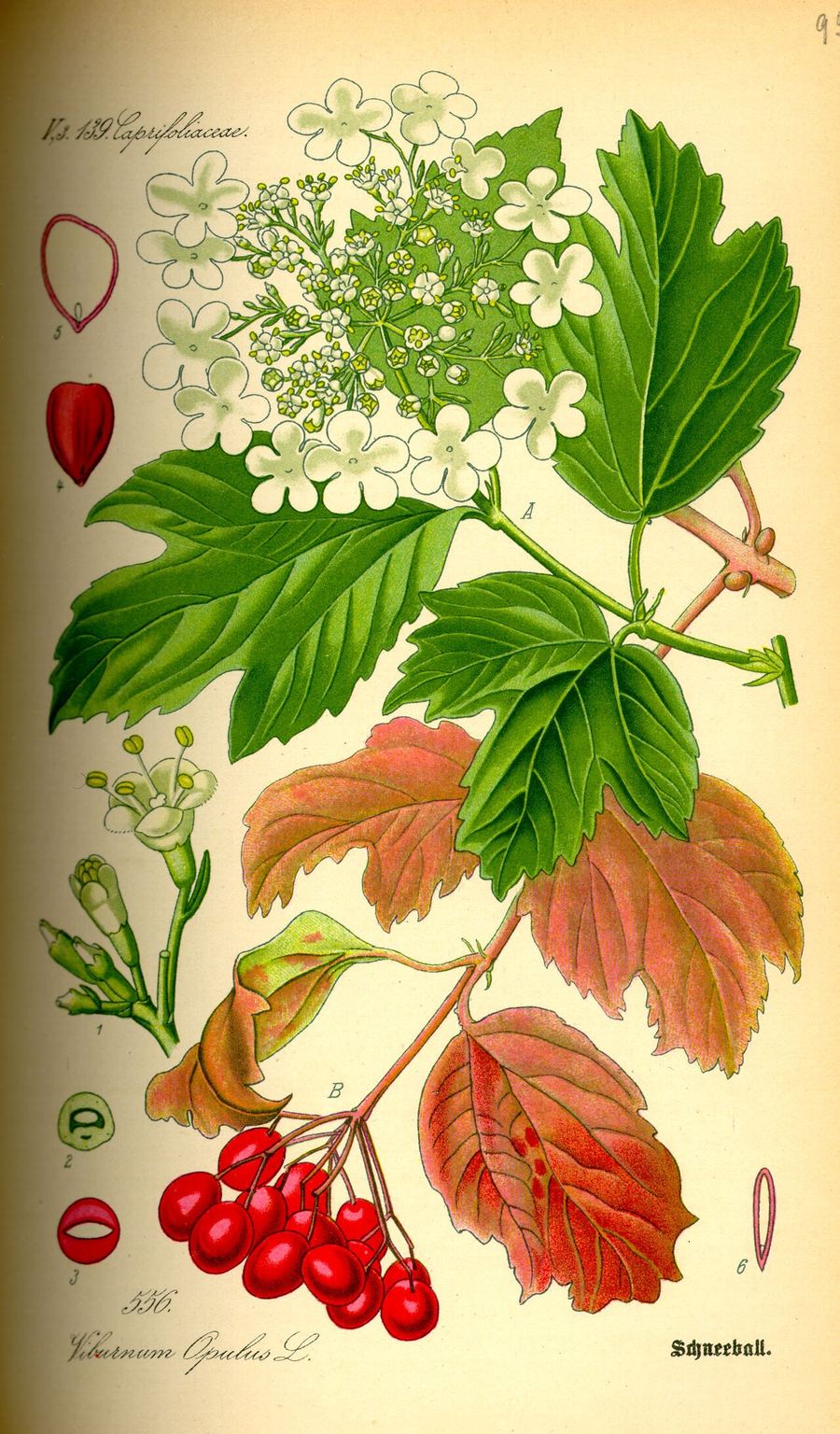
Cramp bark
Viburnum opulus
Herbs & Roots. Native American and Western & European.
Also called Guelder rose, European cranberry bush
Avoid in pregnancyThe bark of a shrub that herbalists have used to ease menstrual and muscle cramps, though human evidence is lacking.
Did you know? The guelder rose is named after Gelderland, a region in the Netherlands.
What it may help, and how strong the proof is
- Women's health. Traditional use for painful periods. No good human trials on cramp bark exist.Traditional proof
- Muscles & exercise. Used for muscle spasms and leg cramps. Mainly traditional, with no good human trials.Traditional proof
Parts of the body
Traditional use
North American and European herbalists used the bark for painful periods, back pain, and muscle cramps. Some Native American groups used related Viburnum species, such as black haw, for women's health.
How it is classified
- Herbal actions
- Antispasmodic, Astringent. Energy: neutral.
How people take it
Folk use is a tea or tincture, often a few times a day. There is no standard dose and no tested safe range.
Tea, tincture and decoction.
Where to get it
Grows wild in Europe and Asia, and is planted as an ornamental shrub in North America. Bark is peeled from stems and dried, then sold as bark, tinctures, and capsules.
Be careful
Little is known about safety. Possible side effects include stomach upset and nausea. Related Viburnum barks are believed to affect the uterus, so pregnant people should avoid cramp bark.
Avoid if: pregnancy; breastfeeding; children under 12.
Mixing with other things
- Works well together
Both are old folk blends for menstrual cramps. Proof is limited for each.
- Works well together
Both are gentle folk remedies for cramping and tension. No strong proof for either.
The honest take
Cramp bark is a traditional remedy with no good human studies. It may work as a soothing tea, but there is no proof it eases cramps better than placebo. Use it cautiously, and avoid it if you are pregnant.