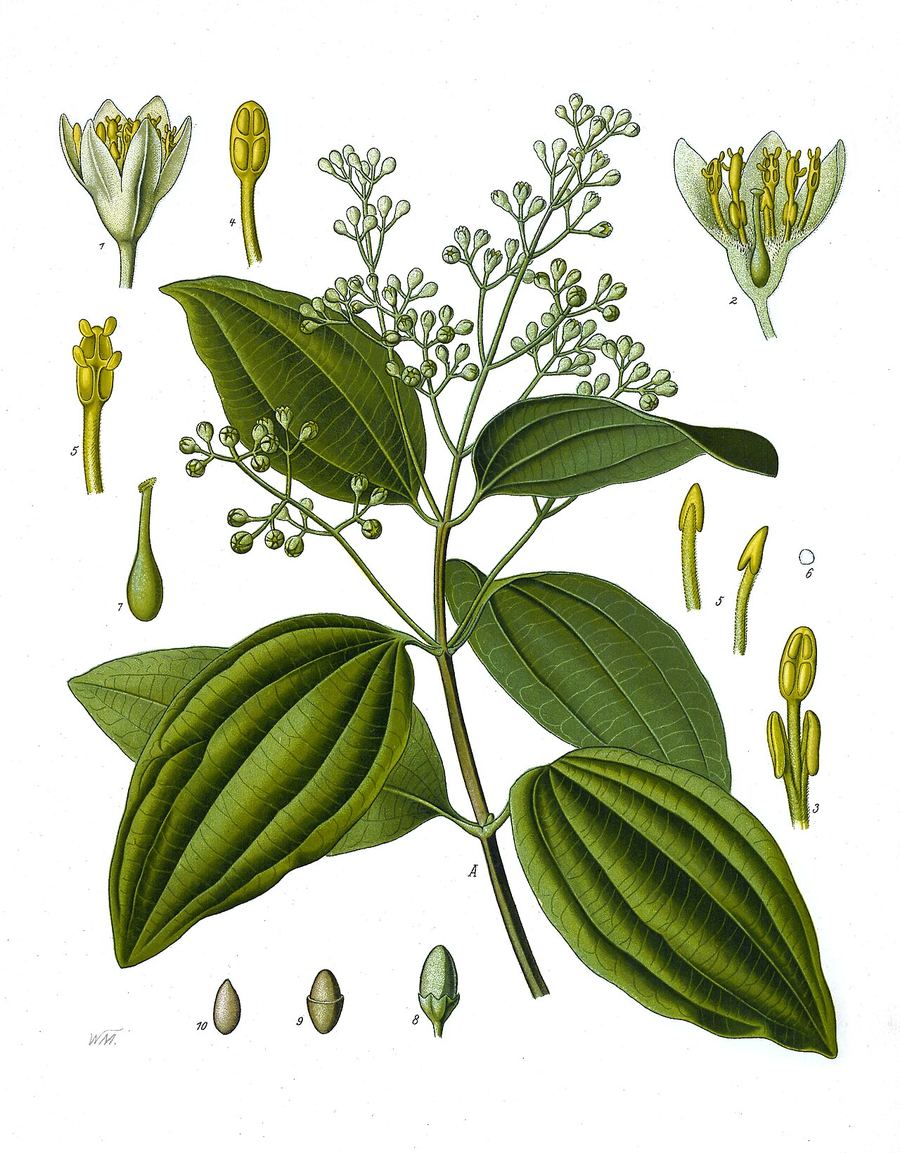
Cinnamon
Cinnamomum verum / Cinnamomum cassia · 肉桂
Spices. Chinese Medicine, Ayurveda and Modern nutrition.
Also called Rou gui, Gui zhi, Cassia, Ceylon cinnamon, Dalchini
Pinyin: Ròu guì
Spanish: Canela
Sanskrit: त्वक् (Tvak)
Cassia type can harm liverThe inner bark of a tree from Sri Lanka or China, used as a spice and in Chinese and Ayurvedic herbal medicine.
Did you know? Cassia cinnamon, the common grocery type, contains much more coumarin than Ceylon cinnamon, and high coumarin intake can harm the liver in sensitive people.
What it may help, and how strong the proof is
- Blood sugar. Small human trials show modest drops in fasting blood sugar. Most trials are short, small and mixed in quality.Early proof
- Digestion & gut health. Used in tradition for stomach gas and cramps. Few good human trials exist.Traditional proof
- Cholesterol. A few small trials report small cholesterol changes, but results disagree. Stronger proof is lacking.Traditional proof
Parts of the body
Pancreas & blood sugar, Gut & intestines, Stomach, Heart & vessels, Liver
Traditional use
Traditional Chinese Medicine uses cinnamon bark (rou gui) to warm the body and ease cold pain and stomach chill, and cinnamon twig (gui zhi) to release colds. Ayurveda uses cinnamon (Dalchini or Tvak) to aid digestion and warm the body.
How it is classified
- Herbal actions
- Carminative, Hypoglycemic, Antimicrobial. Energy: warming.
- Ayurveda
- Calms Vata and Kapha. Taste (rasa): pungent, sweet, bitter. Energy (virya): heating. After digestion (vipaka): sweet. Deepana (kindles digestion).
- Chinese medicine
- 肉桂 Warm the interior. Nature: hot. Flavour: pungent, sweet. Enters the Kidney, Spleen, Heart and Liver channels.
How people take it
Ground cinnamon is common in food and is safe in normal culinary amounts. Studies on blood sugar used about 1 to 6 grams of powder daily. Cassia should not be taken in large daily amounts because of its coumarin.
Food, tea, powder and capsule.
Where to get it
Ceylon cinnamon (Cinnamomum verum) comes mainly from Sri Lanka. Cassia (Cinnamomum cassia) comes from China, Indonesia and Vietnam. Sold as sticks, ground spice, capsules and extracts.
Be careful
Cassia contains coumarin, which can harm the liver in sensitive people at high intake. Cinnamon oil in large amounts can irritate the mouth and skin. Medicinal amounts are not well studied in pregnancy, and blood sugar medicines can add to the blood sugar drop.
Avoid if: liver disease; pregnancy at medicinal doses.
Mixing with other things
- Works well together
Often blended into Jamaican-style sea moss drinks.
- Works well together
Classic pair in chai and baking.
- Works well together
Classic holiday spice blend.
- Works well together
Common warm spice pair in baking and chai.
- Works well together
Cinnamon twig (gui zhi) is in Ge Gen Tang, where it warms the body and releases the outer layer.
- Works well together
Ma Huang Tang (Ephedra Decoction) pairs ephedra with cinnamon twig, apricot kernel and licorice for chills and wheezing. It is a classic formula for expert use only.
- Works well together
Shi Quan Da Bu Tang (Ten Complete Tonic) includes cinnamon bark with dong quai, astragalus and rehmannia for weakness with cold signs.
- Works well together
Also in Shi Quan Da Bu Tang, where astragalus supports energy.
- Works well together
Gui Zhi Tang (Cinnamon Twig Decoction) uses cinnamon twig with ginger, white peony and licorice for cold, wind-type symptoms.
- Works well together
Also in Gui Zhi Tang, where white peony softens the formula and eases cramps.
- Works well together
Cinnamon is sold with chromium for blood sugar. Neither has strong proof.
- Works well together
Apple and cinnamon are a classic pie and baking pairing.
- Works well together
Raisins and cinnamon are a classic pair in bread and oatmeal.
- Works well together
Cinnamon with baked sweet potato is a common pairing.
- Works well together
Cinnamon and oatmeal are a classic breakfast pair.
- Works well together
Cinnamon and cacao are a classic pair in Mexican hot chocolate.
- Works well together
Part of Chinese five-spice powder.
- Works well together
A common pair in baked goods and sweet spice blends.
- Use cautionDiabetes medicine (metformin, insulin, glipizide, Ozempic)
Cinnamon may lower blood sugar. Combined with diabetes medicines, it may cause low blood sugar.
- Worth knowingBlood thinners (warfarin, Eliquis, Xarelto, Plavix, daily aspirin)
Cassia contains coumarin, a chemical family related to some blood thinners. Human interaction data are lacking.
Adds up with others that may lower blood sugar: , , , , , , , , , , , , , and 39 more.
Found in these formulas
Chyawanprash (Ayurveda), Golden milk (Ayurveda), Masala chai (Ayurveda), Elderberry syrup (Western), Sorrel drink (Caribbean)
The honest take
Culinary cinnamon is safe and pleasant in food. Blood sugar results are mixed, and most trials are small and short. The cassia type should not be taken in large daily amounts or as a high-dose supplement, because coumarin can harm the liver.