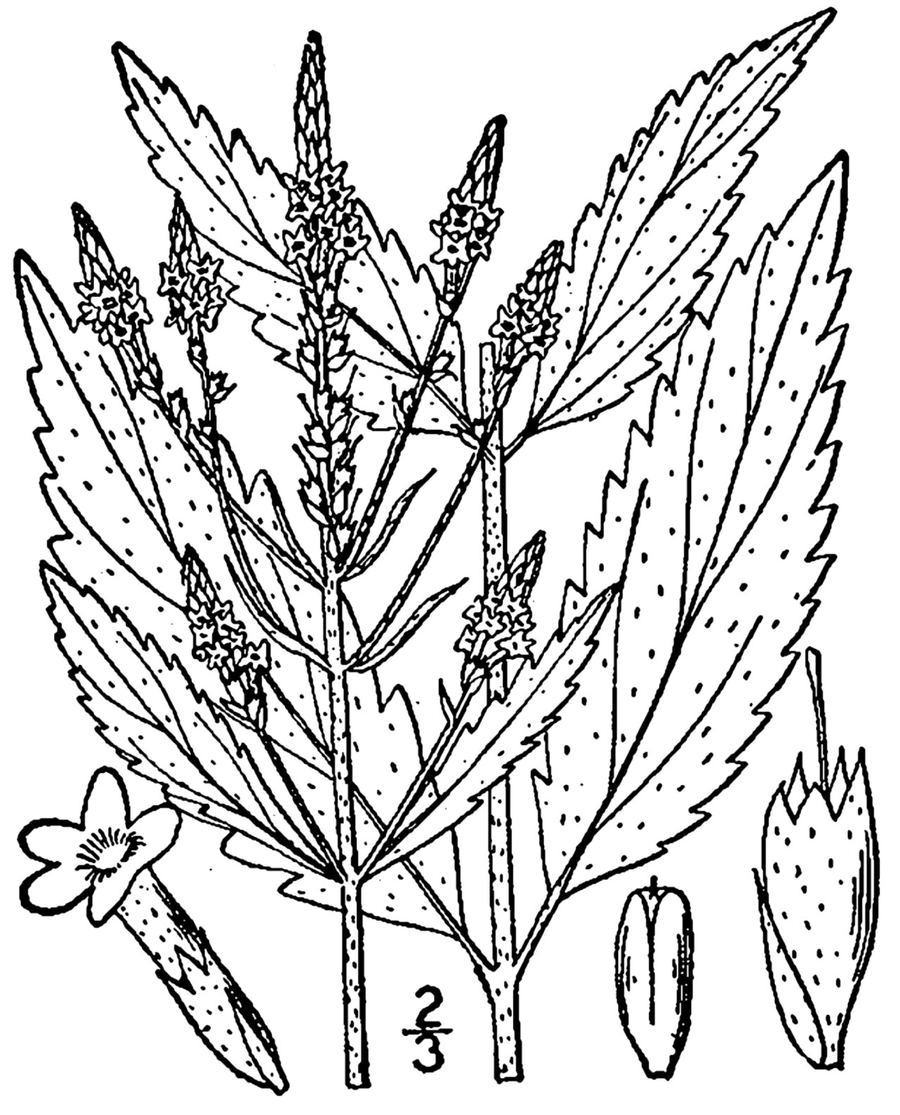
Blue vervain
Verbena hastata
Herbs & Roots. Native American, Western & European and Dr. Sebi's list.
Also called Vervain, American vervain
Avoid in pregnancyA tall North American wildflower used as a bitter, calming tea for nerves and fevers.
Did you know? Vervain has been called a sacred herb since ancient Rome, a reputation that comes from folklore rather than proof.
What it may help, and how strong the proof is
- Stress & anxiety. Used to calm nerves and ease tension. Traditional only, with no good human trials.Traditional proof
- Fever. Used to bring on sweating during fevers. Traditional, with little human testing.Traditional proof
Parts of the body
Traditional use
Native American peoples used blue vervain for fevers, wounds, and nerves. Later North American herbalists used it as a calming tea.
How it is classified
How people take it
Tea is made from dried herb, or taken as a tincture. No tested dose exists.
Tea and tincture.
Where to get it
Blue vervain grows wild in wet meadows and along streams across eastern and central North America. Dried herb and tinctures are sold by some herb shops.
Be careful
There is little human safety data. Avoid it in pregnancy, since vervain has long been used to bring on periods. Large amounts may upset the stomach, and calming effects may add to sedative medicines.
Avoid if: pregnancy; breastfeeding.
Mixing with other things
- Works well together
Both are nervine herbs used together in traditional calming teas.
- Works well together
Gentle calming teas often combine them.
- Use cautionSleep or anxiety medicine (Ambien, Xanax, Ativan)
Calming herbs may add to sedative drugs, so use care.
- Use cautionAlcohol (beer, wine, spirits)
Alcohol adds to the drowsiness.
Adds up with others that can make you drowsy: , , , , , , , , , , , , , and 14 more.
The honest take
Blue vervain has a long use in North American folk medicine. There are no good human trials showing that it calms nerves or helps fevers. Use it with care, and not during pregnancy.