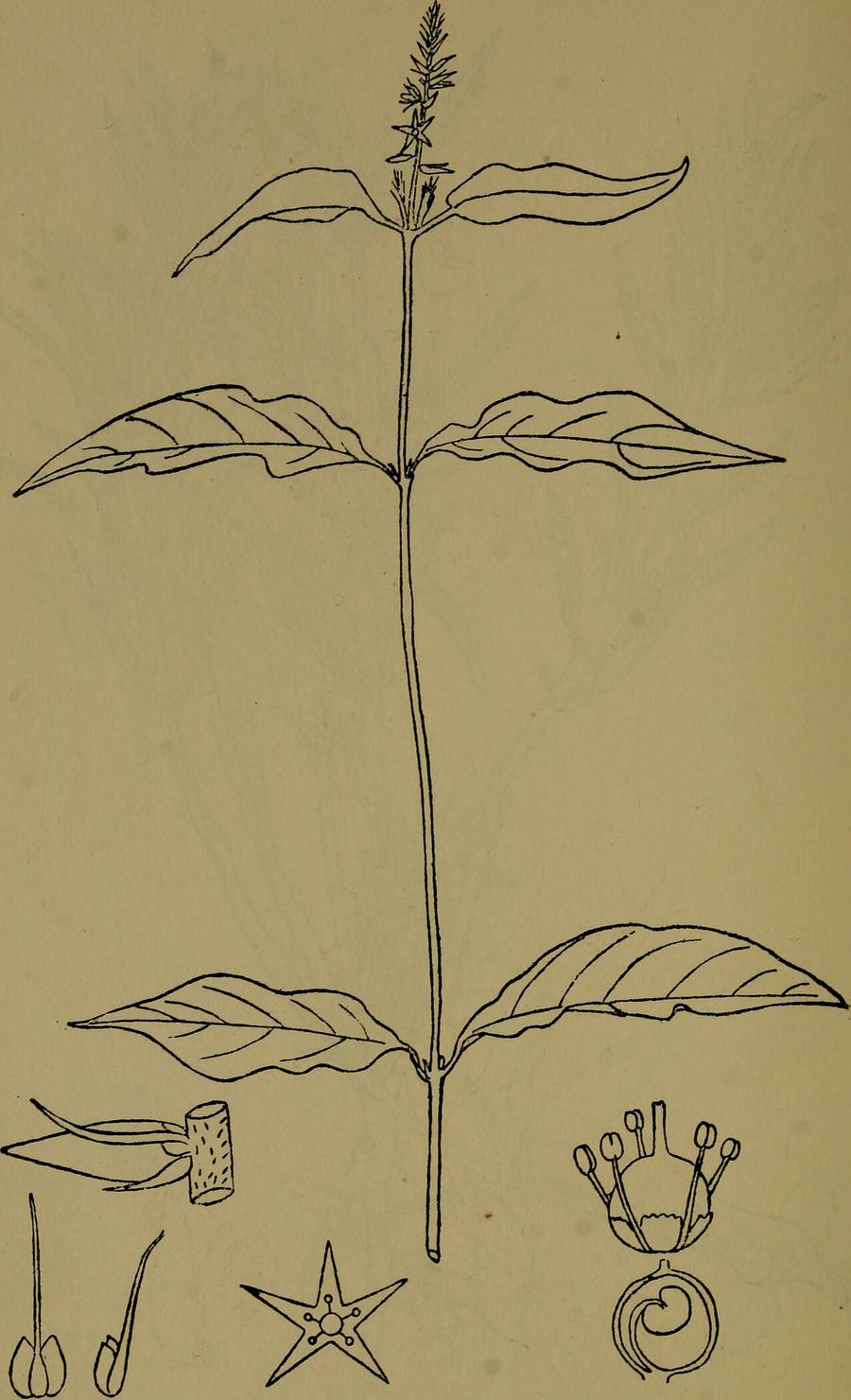
Achyranthes (niu xi)
Achyranthes bidentata · 牛膝
Herbs & Roots. Chinese Medicine and Ayurveda.
Also called Niu xi, Cow's knee root, Chinese achyranthes
Pinyin: Niú Xī
Avoid in pregnancyA root used in Chinese medicine for sore knees and lower back, and for slow or painful urine flow.
Did you know? The name niu xi means cow's knee, because the swollen joints on the stem look like a cow's knee.
What it may help, and how strong the proof is
- Joint pain & arthritis. Used for knee and back pain in Chinese formulas. Mostly tradition and lab work so far.Traditional proof
- Kidneys, bladder & UTIs. Used for painful or slow urine flow in tradition. Human trials are lacking.Traditional proof
Parts of the body
Traditional use
Chinese medicine uses niu xi to move blood, strengthen the knees and lower back, and help urine flow. It is often used in formulas for joint pain and weakness. A different species, Achyranthes aspera, is used in Ayurveda.
How it is classified
- Herbal actions
- Circulatory, Diuretic, Tonic. Energy: neutral.
- Chinese medicine
- 牛膝 Invigorate blood. Nature: neutral. Flavour: bitter, sweet, sour. Enters the Liver and Kidney channels.
How people take it
Traditional decoctions use about 5 to 12 grams. Both raw and wine-processed roots are used in practice.
Decoction, powder, tea and capsule.
Where to get it
Grown in northern and central China. Sold as dried root pieces, powder, and capsules, often in mixed formulas.
Be careful
Avoid in pregnancy, since traditional texts warn it can start periods or cause miscarriage. Ask a clinician before combining it with other herbal formulas.
Avoid if: pregnancy; bleeding disorders.
Mixing with other things
- Works well together
Du zhong and niu xi (achyranthes) are both in Du Huo Ji Sheng Tang for lower back and knee weakness.
The honest take
Niu xi is a real part of Chinese joint and back formulas, but human trials of the herb alone are few. Most of its uses come from tradition. Do not use it in place of care for joint pain or urinary infections.